

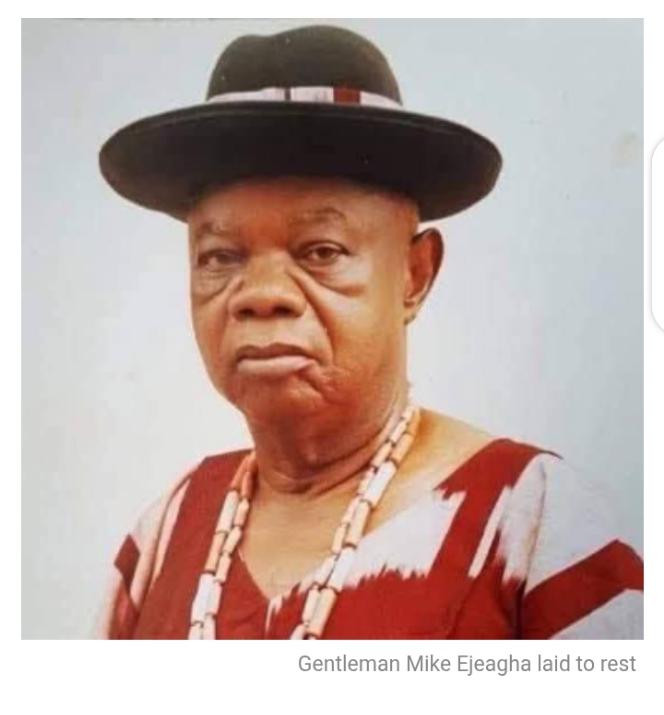
Gentleman Mike Ejeagha laid to rest
Veteran highlife musician Mike Ejeagha has been laid to rest in his country home, Umuagba, Imezi–Owa, Ezeagu LGA, Enugu State. He died on Saturday at the age of 95, Friday night in Enugu.
His burial was conducted by members of his family just about 24 hours after his death without an elaborate funeral ceremony. The Advocate learnt that ‘Gentleman’ Ejeagha was simply laid to rest according to his wishes.
Condolences have been pouring in from across the globe as people pay their tributes to the Highlife legend. President Bola Tinubu, Enugu State Governor, Peter Mbah, former Vice President Atiku Abubakar, and former Anambra Governor Peter Obi were among those who sent tributes and condolences on the death of the musician on Saturday.
How ‘Gwogwogwom-Gwo’ Highlife Legend, Mike Ejeagha, Died – Family
The popular Nigerian highlife musician, Mike Ejeagha, died at the age of 95 after a prolonged illness, his first son, Emmanuel Ejeagha, has confirmed to newsmen on Saturday.
According to him, his father, popularly known as “Gentleman, Mike Ejeagha,” passed to the great beyond on Friday night. He said Ejeagha died at about 8 p.m. at the 32 Garrison Military Hospital, Enugu. My father passed away due to a long-standing ailment,” he said.
Ejeagha’s legacy is marked by his distinctive style of Igbo folk music, which resonated across multiple generations. Born on April 4, 1930, in Imezi Owa, in Ezeagu Council Area of Enugu State, Ejeagha rose to prominence during the 1960s and 1980s with timeless hits like Omekagu, Uwa Mgbede Ka Mma, and Ka Esi Le Onye Isi Oche – Gwogwogwom-gwo.
Ejeagha’s contributions to preserving and promoting Igbo culture through music are monumental, with over 300 recordings archived in the National Archives of Nigeria. His recent resurgence in popularity, sparked by the viral dance challenge of his 1983 track Ka Esi Le Onye Isi Oche in 2024, introduced his music to a younger audience.
Ejeagha’s passing marks the end of an era for Nigerian highlife music, but his legacy endures through his extensive discography and the impact he left on Igbo folklore and music.
