

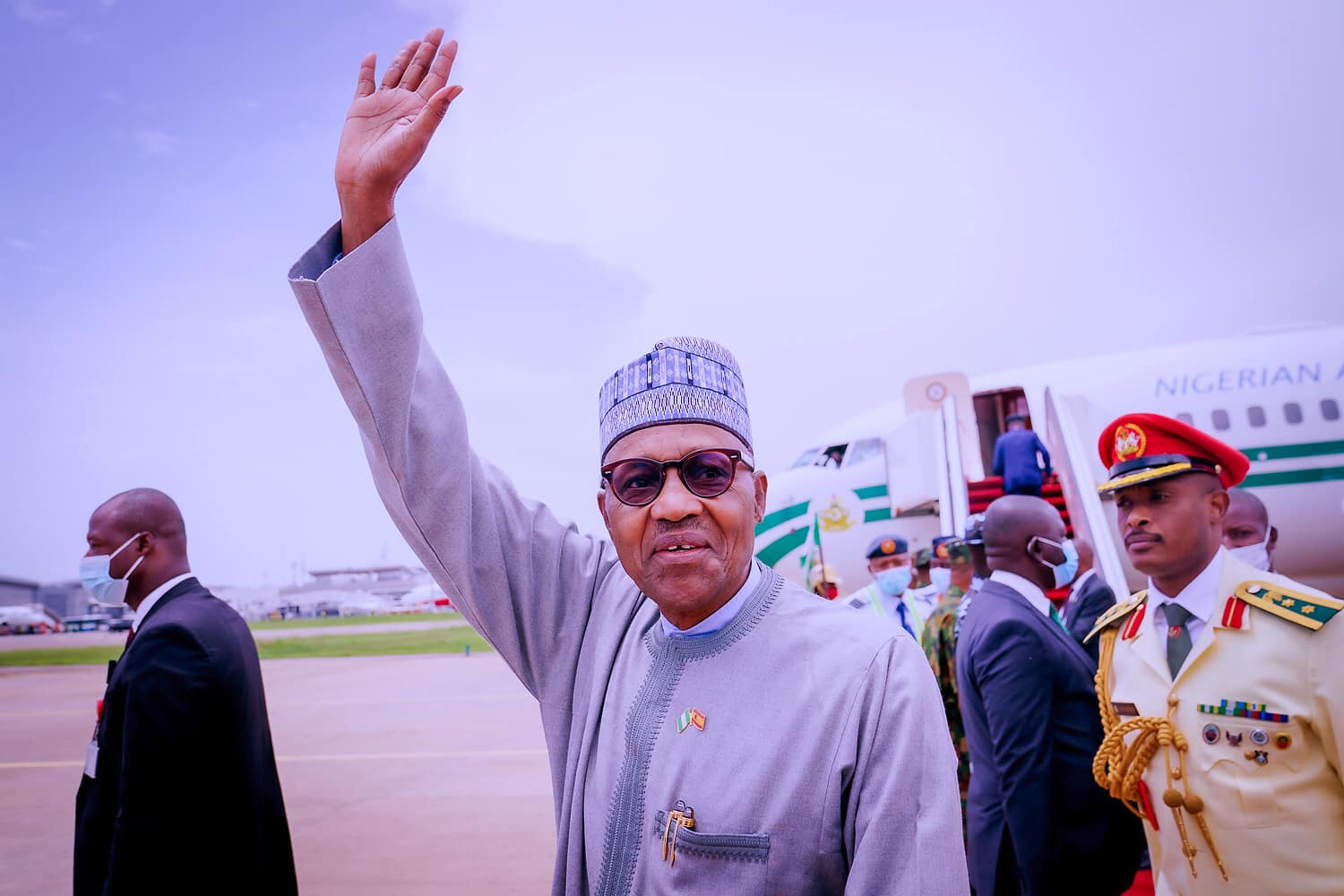
By Emmanuel Gandu
PART I
CONTENT HIGHLIGHTS
- Excerpts
- Introduction
- The man – Muhammadu Buhari
- Buhari’s Fulani ancestry and impact on Nigeria :
(a) Who are the Fulani
(b) Who is Usman Danfodio
(c) Fulani agenda implementation
EXCERPTS
“It’s unethical to jubilate when a man is down. However, the wild celebration across the North, especially in the streets of cities like Kano, Katsina, and Kaduna at the news of the death of the immediate past president of Nigeria is disheartening and regrettable. As announced by Garba Shehu, Muhammadu Buhari died in a London hospital on Sunday, 13/7/2025. May his gentle soul rest in peace. Ameen.”
“Unfortunately, this inept, clueless, and dangerously nepotic Buhari succeeded in putting a knife to the things that held us together, pushed Nigeria to the brink, and we’ve fallen apart.”
“During his watch, Nigeria became an imperiled, impoverished, debtor and beggar nation that is now divided along several fault lines of tribe, religion, regional, and other divisive negativity.”
“It’s appalling, despicable, and irresponsible for a government that came to power in May 2015 when the value of the Naira was 197.8763 to the $Dollar to hand over in May 2023 at N755 to the $Dollar, N947 to the £Pound, and N810 to the €Euro.”
“For a Buhari as Head of State in 1985 to have (alleged) voted for Ide Oumorou, a Fulani from Niger Republic for the post of Secretary General of OAU and not for Peter Onu, an Igbo man from Nigeria smacks of his blatant penchant for affinity to his Fulani heritage as against his allegiance and loyalty to Nigeria.”
“By the time he left office at the end of his ignominious 8 years presidency, Muhammadu Buhari was likened to a guilty, shameless lame dog searching for an escape route with its tail tucked in between its hind legs at the sight of onlookers and passers-by.”
INTRODUCTION
This is a tribute to a fine soldier of the Nigerian Army, a two-term civilian president of Nigeria (2015 – 2023). It is an attempt to highlight the life and times of Muhammadu Buhari; it is a chronicle of the “BUHARI LEGACY.”
While it’s unethical to jubilate when a man is down, however, the wild celebration across the North, especially in the streets of cities of Kano, Katsina, and Kaduna at the news of the death of the immediate past president of Nigeria is disheartening and regrettable. As announced by Garba Shehu, Muhammadu Buhari died in a London hospital on Sunday, 13/7/2025. May his gentle soul rest in peace. Ameen.
The seemingly lack lustre 8 years presidency of Nigeria by Muhammadu Buhari can best be described as a lost generation. This anomaly was characterised by human misery largely due to his stubborn and deliberate foisting of anti people policies of vengeance and vendetta devoid of a workable economic roadmap.
With all sense of objectivity, the performance of the Buhari government in terms of the economy, security, education, social welfare, political development, and investment was abysmal.
During these ignoble years, Nigeria was a roderless ship manned by a clueless captain and crew that led to a shipwreck in the rocky turbulent waters of economic mismanagement, corruption, insecurity, daunting foreign debts, nepotism, poverty, religious intolerance, collapse of industrial and critical infrastructure, and the fall of a national currency at its lowest ebb ever.
It’s appalling, despicable, and irresponsible for a government that came to power in May 2015 when the value of the Naira was 197.8763 to the $Dollar to hand over in May 2023 at N755 to the $Dollar, N947 to the £Pound, and N810 to the €Euro.
Unfortunately for Nigeria, this inept, clueless, and dangerously nepotic Buhari succeeded in pushing the country to the brink. During his watch, Nigeria became an imperiled, impoverished, debtor and beggar nation that is divided along several fault lines of tribe, religion, regional, and other divisive negativity.
For a president, Buhari with a few days to the eclipse of his 8-year administration, to seek approval for a loan of $800 million from the World Bank smacks of corruption and indiscipline.
Regrettably, this Daura born retired military General, former GOC, former governor, former petroleum minister, former Head of State, former PTF chairman, and former president of Nigeria, and on May 29th, 2023, bequeathed to Nigerians a legacy that leaves much to be desired. Buhari has put a knife on the things that held us together, and we’ve fallen apart.
At the end of his ignominious 8 years presidency, Muhammadu Buhari was likened to a guilty, shameless lame dog searching for an escape route with its tail tucked in between its hind legs at the sight of onlookers and passers-by.
THE MAN – MUHAMMADU BUHARI
Muhammadu Buhari was born on 11th December 1942 to a Fulani family in Daura Katsina State. His father is Mallam Hardo Adamu Buhari from Dumurkul in Mai’Adua, and his mother is Zulaihat Buhari of Hausa and Kanuri ancestry. Buhari was the 23rd child of his father, who died when Buhari was 4 years old.
A distinguished and disciplined military officer, Muhammadu Buhari was:
- Fought as a senior military commander during the 30 months Biafra Nigeria Civil War of 1967 – 1970.
- Governor of Borno State from July 1975 – March 1976.
- Head of the Federal Commission for Petroleum and Natural Resources – March 1976.
- When the Nigerian National Petroleum Corporation (NNPC) was created in 1976, Buhari was appointed as its chairman, a position he held until 1978.
- GOC Jos during the Shehu Shagari presidency.
- Head of State through a military coup. 31st December, 1983 – 27th August, 1985 (removed in a military coup by Major General Ibrahim Babangida).
- Chairman Petroleum Trust Fund (PTF) 1995 – 1998 (appointed by General Sani Abacha).
- Buhari took a shot at the democratic presidency of Nigeria on three (3) consecutive unsuccessful attempts in 2003, 2007, and 2011.
- Democratic President of Nigeria 29th May 2019 – 29th May 2023.
During his 8-year presidency, Buhari’s health and ability to lead Nigeria was called to question after he repeatedly went abroad for medical attention. In 2017 alone, Buhari left Nigeria multiple times for treatment of an undisclosed ailment.
That year (2017) he was absent for more than 5 months altogether, leading to rumours that he had died and been replaced or cloned by a body double. Muhammadu Buhari married Safinatu Yusuf in 1971, and they had four girls and a boy. They divorced in 1988. He again married Aisha Halilu in 1989 and they had four girls and a boy.
FULANI ANCESTRY: IMPACT ON BUHARI’S POLICIES AND GOVERNANCE
(1) Who are the Fulani? Who is Usman Danfodio?
Fulani is an ethnic group spread across many countries, but predominantly in Central Africa, West Africa, and East Africa. Their population is of major significance in Mauritania, Senegal, Guinea, Gambia, Mali, Niger, Nigeria, Sierra Leone, Central African Republic, Cameroon, and Burkina Faso.
The Fulani speak Fula or Fulbe language, and are traditionally nomadic pastoralists herding cattle, sheep, and goats across borders and into the hinterlands. They keep separate lives and lifestyles from the local indigenous farming / agricultural population. The origin of the Fulani is traced to the Berber people of North Africa around the 8th – 11th century AD, from where they migrated and spread across regions.
They were the first group of people in West Africa to convert to Islam. Through Jihad (Holy War) they were able to take much of West Africa, especially the Hausa pagan territories and towns. Interestingly to them, and unfortunately for others, the Fulani have established themselves not only as a religious, tribal, but also as a political, economic, and a fighting force in defence of their cause.
As a result, they have continued to forcefully conquer and occupy much of West Africa, including Nigerian territory. In 1804, Usman Dan Fodio, a fierce, studious, and Charismatic Muslim Fulani Scholar, began preaching reformist ideology in the Hausa Kingdoms of West and Central Africa. His movement became a revolution, and seeing himself as God’s instrument, he preached and launched Jihad against the Hausa Kings, whom he felt were not following the teachings of the Prophet. A great upheaval ensued during which the Fulani took control of most of the Hausa States in Northern Nigeria and elsewhere.
A new kingdom based on the city of Sokoto, known as the ‘Sokoto Caliphate’ emerged as the headquarters of the Fulani empire in Nigeria. The Sokoto caliphate’s hegemony was established over Northern Nigeria (excluding the Borno Empire and most parts of the Middle Belt), especially in Emirates like Kano, Zaria, Katsina, Daura, Dutse, and Ilorin, who’s rulers became Fulani Emirs under the provinces within the Sokoto caliphate.
As part of their expansionist strategies, the Fulani first moved into an area and tended to be peaceful. The local indigenous people give them land on lease or as grants, where the cattle droppings as manure serve as batter. With the passage of time, the number of new Fulani arrivals increases by multiples. This influx is fuelled by larger migration aggravated by the practice of seasonal movement and trans humance across several countries in search of pasture and water for their cattle.
Consequently, Fulani resentment at being ruled and dictated to by ‘pagans’ soon became an issue of disagreement with the indigenous landowners. Besides, grazing land for their cattle has progressively become an issue of violent conflict with the host community.
According to Zackarys Gundu, a Professor of Archeology, Ahmadu Bello University, Fulani feudalism is real, and it is why we cannot reason same way. What Islam means to FULANI is ‘OCCUPATION AND USURPATION OF THE CONQUERED BY FULANI OLIGARCHY KINGDOM’.
But what Islam means to others is Religion. Every Fulani from outside Nigeria can come to the country to get more rights and privileges over YOU the Nigerian.
These are the basic principles and patterns of Fulani ethnic violence, domination, occupation, and forceful land grabbing employed by the Fulanis over the ages, and Muhammadu Buhari was widely accused of championing their cause at the expense of good and equitable governance to other Nigerian tribes.
(2) Buhari’s Fulani agenda implementation:
As a typical Fulani, Muhammadu Buhari came to serve the interest of the Fulani no matter their country of origin. This he had demonstrated in words and deeds, in policy implementation and governance, in private and public, within and outside Nigeria. Buhari divided public opinion among Nigerians by his skewed policies, governance, and his tacit support in favour of the Fulani tribe and the Hausa North.
This was glaringly evidenced in the lopsided appointment and promotion to the armed forces and the police, the MDA’s, the federal and state educational system, civil service, citing of projects, and critical infrastructure. Buhari’s refusal to ensure arrest, prosecution, and justice to the endless wanton destruction of life and property perpetrated by his Fulani herdsmen militia terrorists across the country was a crime that was left for God’s justice.
For a Buhari as Head of State in 1985 to have (allegedly) voted for Ide Oumorou, a Fulani from the Niger Republic, as Secretary General of OAU and not for Peter Onu, an Igbo man from Nigeria, smacks of his blatant penchant for affinity to his Fulani heritage as against paying allegiance and loyalty to Nigeria. Buhari was not done yet with his unrepentant allegiance to his Fulani heritage.
On Tuesday, 23rd May 2023, the outgoing president warned his enemies in Nigeria that the Niger Republic will defend him in the event of any attack when he leaves office.
While regions like Benue, Plateau, Southern Kaduna and the entire Middle Belt; South East; South South; and South West felt abandoned by the absence of equity, justice, and fair play by Buhari’s 8 year presidency on the one hand, the Fulani and the Hausa North on the other hand saw Buhari as their God sent messiah, or better put, as heir apparent to Usman Danfodio – a heir apparent that has superintended and allowed the Fulani turn Nigeria into a Killing field that flows with tears and blood.
Peace 15/7/2025
