

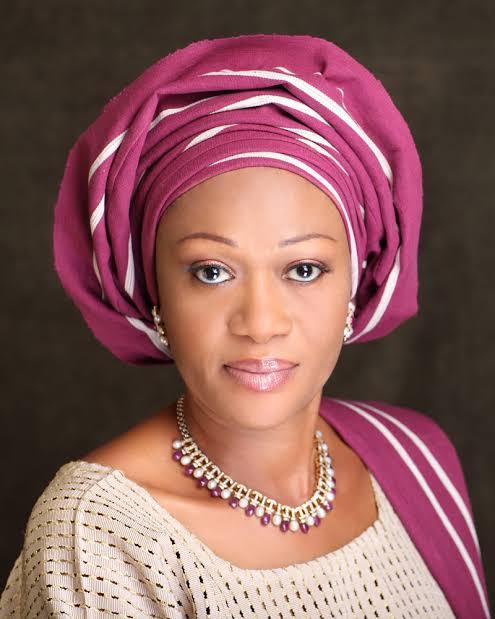
Wife of President Tinubu, Senator Oluremi
By Charles Onunaiju
Foreign policy and the machinery of diplomacy through which it is executed belong to the core or fundamentals of state policy, for which governments can refine, readjust, and even retool, but not abruptly abandon without undermining the integrity of the State among its peers with which it interacts on the global stage. Diplomacy is routinely sensitive, and gestures from key State actors or those closely associated with them can send strong signals on intentions and direction, all of which resonate with friends and foes alike and can alter the flows of anticipated inputs to the prospective beneficiary state.
For core and premium partners, gestures, signals, and directions must be unambiguously clear and even reassuring; otherwise, reciprocal actions would be restrained, hesitant and even timid to the point of stalemate. Nigeria’s economic and security challenges have meant that the government’s prioritisation of a robust trade and investment drive with relevant international partners is the right way to go. Progress in this direction has been mixed, but the intervention and interruptions of Mrs. Remi Tinubu, the First Lady and former senator, mean that results would not be expected soon, and even the modest outcomes and gains so far may be lost.
Her latest intervention in Nigeria’s diplomacy, hosting the Trade Representative, Mr. Andy Yih-Pin Liu of the Taipei Trade Office at the State House in Abuja, brought the roof crashing on one of Nigeria’s enigmatic foreign relations and bilateral partnership, spanning more than fifty years. Since 10th January, 1971, when Nigeria established diplomatic relations with the People’s Republic of China (PRC), the basis of its long-enduring relationship and its contemporary fruitful engagement has been on the understanding of mutual respect for the core interests of each other while demonstrating abiding sensitivities to the fundamental concerns of each other.
On this basis, the bilateral relationship, which was recently elevated to a comprehensive strategic partnership, has developed and flourished. The People’s Republic of China has become Nigeria’s foremost partner, and this was demonstrated last year, when President Tinubu established the Office of the Nigeria-China Strategic Partnership (NCSP) in the presidency and appointed a Director General to coordinate the partnership to maximise its outcomes and integrate it into the national aggregates for sustainable development.
This was soon after President Tinubu’s State visit to China in September last year. In the document outlining the comprehensive strategic partnership, “The two sides reaffirmed their firm support for each other on issues related to their respective core interests and major concerns, particularly sovereignty and territorial integrity. The Chinese side supports the Renewed Hope Agenda of Nigeria and efforts made by Nigeria in maintaining national unity, peace, security and social stability. The Nigerian side firmly adheres to the One China Principle, acknowledges that there is but One China in the world, and the government of the People’s Republic of China is the sole legal government representing the whole of China, and Taiwan is an inalienable part of China’s territory”.
In the run-up to the first anniversary to this historic document, outlining the core interests of each sides and the trajectories to robust and mutually-beneficial partnership, Mrs. Tinubu hosted in the State House, a representative of a Taiwan separatist clique of the Democratic People’s Party (DPP) which is not at all, representative of the broad sentiments of the 22 million residents of the Taiwan region for national re-unification with their kit and kins at the mainland.
The Taiwan question is a product of China’s history and is universally acknowledged as China’s internal affairs. For more than 50 years, Nigeria has held tenaciously to the “One China” policy and has been bold and ambiguous about it. Nigeria’s engagement with the Taiwan region of China coincided with the preeminence of the so-called four Asian dragons in the 1990s, when the military government in Nigeria then, was then focused on what it called economic diplomacy.
Republic of Korea or South Korea, Singapore, China’s Taiwan and Hong Kong were the four dragons and without undermining Nigeria’s One China policy, the military government then was careful to craft only a trade agreement with the Taiwan region leading to the establishment of “Taipei Trade Office” in Nigeria to be headed by a person designated as “Trade Representatives”.
Beijing has not opposed cultural or trade cooperation of Taiwan with people of other countries but frowns at any optics that tend to convey the status of a diplomatic entity to the Taiwan regional authority as that would amount to endorsing “Two Chinas” or “One China, One Taiwan”, which as the Chinese see it, cut painfully at their national sovereignty and territorial integrity and abuse their national sensitivity. The Taipei Trade Office, for its activities that were considered inconsistent with its status as a strictly trade office, was kicked out of Abuja in 2017 by the Nigerian government and directed to relocate to Nigeria’s commercial hub – Lagos, to send an unmistakable signal about the integrity of Nigeria’s “One China Policy”.
Meanwhile, the economic rationale for the economic and trade outreach to the Taiwan region has dissipated. The People’s Republic of China has become the second-largest economy in the world and the largest trading partner to more than 120 countries in the world. In the past fifteen years, China has been Africa’s biggest trading partner with trade volume nearing 300 billion U.S dollars. While trade with Nigeria climbed to more than 20 billion USD last year, the trade with the Taiwan region stood at less than 400 million USD in the same period. More than two hundred Chinese companies operate in the different sectors of Nigeria’s economy and generate tens of thousands of direct jobs.
Only last March, 74 Chinese companies were reported to indicate interest in investing in Nigeria’s Oil and Gas sector. Nigeria is an important partner of the Belt and Road Initiative, a framework of international cooperation that focuses on building connectivity across vast areas of infrastructure, policy, people-to-people and financial integration. Nigeria’s deepest seaport in Lekki was built in a record time of three years under the Nigeria-China Belt and Road Cooperation.
Nigeria and China’s recent upgrade of their bilateral cooperation to a comprehensive strategic partnership opens a pathway to more fruitful and productive engagement. Mrs. Tinubu reckless forage into the realm of Nigeria’s diplomacy might have dangerously put all these prospects on hold, including the 20 billion U.S dollars gas park in Ogidigben except Nigeria initiate a bold measure to clarify her actions as misdemeanour born out of ignorance and also adequately penalize the Taipei Trade Representative for the impudence and affront on one of the pillars of the country’s foreign relations. For the avoidance, Mrs. Tinubu should be cautioned to halt her foray into Nigeria’s diplomacy.
Last year, while President Tinubu was engaging major Arab states for economic partnership and investment, Mrs. Tinubu went out of her way to host Israeli Diplomats in the State House at a very inauspicious moment when the Jewish State was conducting its most scorch-earth military operations in Palestinian Gaza, targeting women and children.
Notwithstanding that Nigeria maintains a policy of equidistance between Israel and Palestine and is well known for its advocacy of negotiated settlement to their long-running conflict, and has been relatively even-handed to both parties. Mrs. Tinubu’s meeting with the Israeli Diplomats at the State House would have unnerved the Arab States with whom Nigeria was cultivating a partnership for investment and trade, and since that notorious optics in the state House, nothing has been heard from the Arab states of their earlier boisterous assurances to invest in the country.
In most parts of the world, the First Lady or the spouse of the President is not the country’s Chief Diplomat but supports his or her spouse in diplomatic activities, including visits and receptions. There are several domestic worthy causes, the First Lady can support and promote without delving into the ultra-sensitive arena of diplomacy, which defines not only the efficiency of the government but the integrity of the State.
- Mr Onunaiju is a foreign affairs analyst based in Abuja.
