

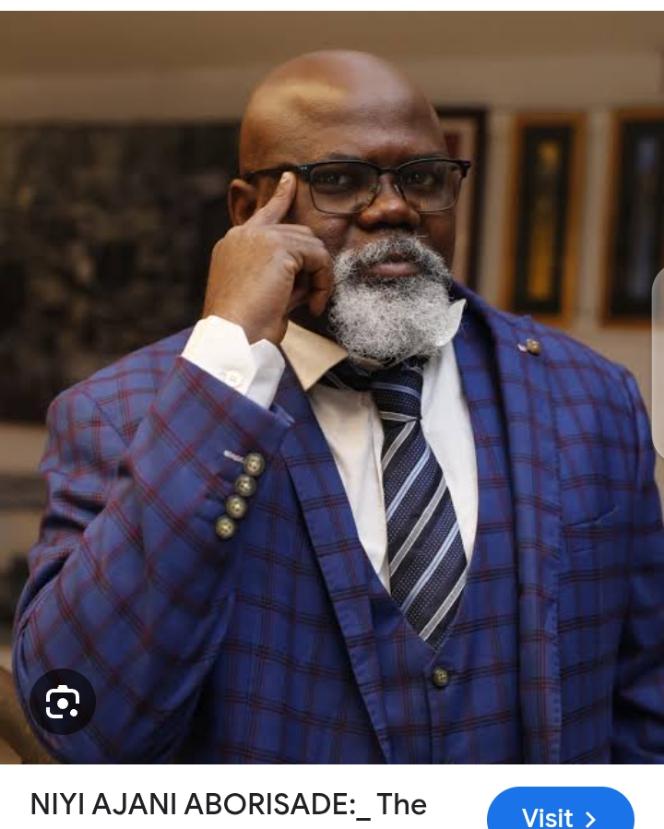
…It Could Easily Be Abused. Can We Really Afford It Now? — Aborisade
Life Bencher and Senior Advocate of Nigeria, Prof. Joy Ezeilo, has weighed into the debate for the establishment of state police, even as President Bola Tinubu days ago reiterated that the creation of state police is no longer optional but a necessary step to strengthen Nigeria’s security network in the face of persistent threats across the country.
However, United Kingdom-based human rights activist and legal expert, Chief Niyi Aborisade, has said that while the creation of state police is a good and necessary idea for Nigeria, the country is not yet ready for its full implementation.
Speaking on Tuesday at the Presidential Villa in Abuja during a courtesy visit by a delegation of Katsina indigenes led by Dikko Radda, the Governor, Tinubu said the federal government remains determined to confront insecurity “head-on.”
In a post shared via her X (formerly Twitter) handle, Ezeilo, SAN wrote: “Who is afraid of the state police and why? I support President Tinubu’s endorsement of the State Police. I have been advocating for this and community policing since 2012, when I submitted a memorandum to the Police Service Commission.
“Given Nigeria’s current security challenges and the substantial security budgets allocated by state governors—often including unconstitutional, opaque, and unappropriated security votes that contribute to corruption—the time has come for state police.
“Policing is local. While there are concerns about potential abuse, these can be addressed through proper legislation and by closing possible loopholes that could be misused. This includes ensuring the independence of the police and establishing proper tenure for police chiefs by law.

“Any governor who misuses this power will face strict accountability and prosecution. I am also willing to offer my legal services free of charge to help develop a model that interested states can adopt.”
Aborisade, a governorship aspirant on the platform of the Peoples Democratic Party (PDP) in Oyo State for the 2027 elections, noted that state police aligns with the principles of federalism, but cautioned that Nigeria’s political and economic realities demand a cautious and measured approach.
“State police is a good and ideal concept in a society like ours with a federal constitution. It empowers governors, who are the chief security officers of their states, to actually exercise control over the security agencies meant to serve their people,” Aborisade said in a statement issued in Ibadan.
Citing the controversial withdrawal of security aides from former Oyo State Governor Rashidi Ladoja during the 2006 political crisis, Aborisade condemned what he described as excessive federal control over state security apparatus.
“That kind of federal overreach is undemocratic. A governor should not be left vulnerable or undermined by the very structure meant to protect citizens,” he added.
Again, Aborisade expressed strong reservations about the timing of state policing, warning that it could easily be abused in Nigeria’s still-developing democracy.
“Our democracy is still evolving, just about 26 years since the return to civilian rule in 1999. Many of our politicians are not yet politically mature enough to handle the responsibility that comes with managing a state police force. There is a genuine fear it could be turned into a tool of oppression against the opposition,” he said.
He also raised concerns about the financial implications, noting that many states are struggling to pay salaries and depend heavily on federal allocations.
“Can we really afford it now? Without a stable economy and stronger internally generated revenue (IGR), state police could become an additional financial burden,” he warned.
As a solution, Aborisade proposed a phased rollout of state police.
“Let us test-run state police in six states — one from each geopolitical zone — for two years. That will allow us to study the outcomes, challenges, and strengths before expanding to the entire federation,” he suggested.
He concluded by stressing that while state police is a step in the right direction, proper preparation is necessary to ensure it strengthens, rather than undermines, democracy.
“We must not jump into it because of pressure or sentiment. Let’s prepare the ground politically, economically, and institutionally so that when it finally comes, it serves the people and strengthens our democracy,” he said.
However, President Tinubu has directed security agencies to reassess their operations in Katsina State, where banditry has been on the rise, and announced that advanced military equipment, drones, and surveillance technology would soon be deployed. He equally disclosed that newly recruited forest guards in the state would receive capacity enhancement to boost their effectiveness.
“The security challenges that we are facing are surmountable. Yes, we have porous borders. We inherited weaknesses that could have been addressed earlier. It is a challenge that we must fix, and we are facing it,” Tinubu said.
“I have today directed all the security agencies to energise further and look at the strategies. We have approved the additional acquisition of drones.
“I am reviewing all the aspects of security; I have to create a state police. We are looking at that holistically,” he added.
Tinubu stressed that insecurity would not be allowed to cripple the nation’s development or disrupt the safety of Nigerians. “We will defeat insecurity. We must protect our children, our people, our livelihood, our places of worship, and our recreational spaces. They can’t intimidate us,” he declared.
The president further instructed that he be provided with daily updates on security operations in Katsina, underscoring his administration’s resolve to ensure the state and other troubled regions are secured.
Tinubu recalled that in February 2024, the federal government inaugurated a committee to develop a framework for state policing. The initiative has received wide support, although as of March, 20 states had yet to submit their reports, according to Vice-President Kashim Shettima.
During the visit, Tinubu paid tribute to the late former President Muhammadu Buhari, describing his passing as a national loss while commending his contributions to Nigeria’s stability.
“The time we lost our brother, President Buhari, is a loss for all of us. It is the will of God Almighty, but he has left in a good way. He didn’t hand over a defeated country, a battered political structure, but a legacy of success, and that is the most important thing,” Tinubu said.
Governor Radda, who led the delegation, thanked Tinubu for his unwavering support.
“Mr President, I would like to thank you very much, and I want to say before our elders that there was never a time I came to the President with a request that he rejected,” he noted.
Other speakers, including Aminu Masari, former Governor, and Ibrahim Ida, the Wazirin of Katsina, commended the president for honouring Buhari and investing in infrastructure projects in the state.
Ida, however, urged the federal government to prioritise the upgrade of Umaru Musa Yar’Adua International Airport and to intensify security efforts in southern Katsina, where communities have been under repeated attacks.
