

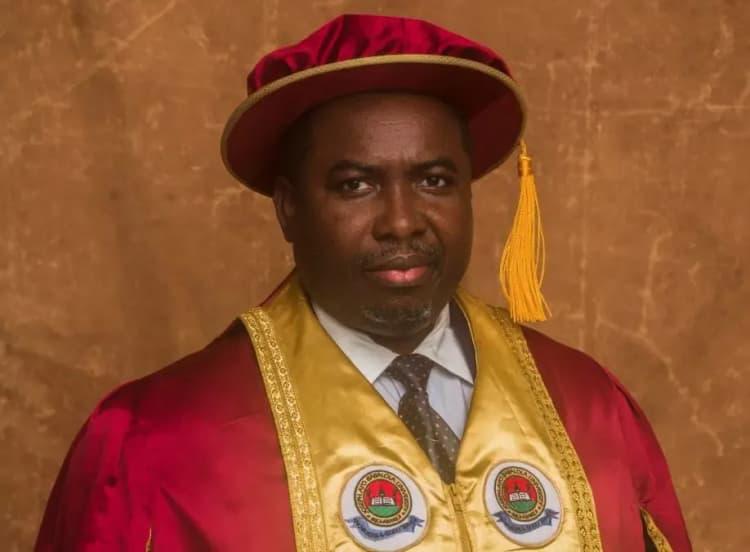
The Supreme Council for Shari’ah in Nigeria (SCSN) has expressed serious concern over reports alleging that the newly appointed Chairman of the Independent National Electoral Commission (INEC), Prof. Joash Ojo Amupitan, once authored a controversial legal paper containing “provocative, distorted, and sectarian” claims about Northern Nigeria and the 19th-century jihad of Sheikh Uthman bn Fodio.
In a statement issued by its Secretary-General, the Council said the revelations, first reported by Sahara Reporters, raise troubling questions about Prof. Amupitan’s impartiality and suitability to lead Nigeria’s electoral body.
“It is unfortunate and disturbing that an individual now entrusted with overseeing Nigeria’s democratic integrity could have espoused such bigotry in divisive, sectarian, and inaccurate narratives against a majority faith community,” the statement read.
The Council said if Prof. Amupitan indeed authored the document, “his submissions are not only unbecoming of a person of learning but dangerously inimical to the unity, peace, and stability of our country.”
Debunking what it described as “falsehoods” in the alleged publication, the SCSN rejected Amupitan’s supposed claims of a “Christian genocide” and his alleged attempt to link current insecurity in Northern Nigeria to the historic jihad of Sheikh Uthman bn Fodio.
“Nothing could be further from the truth,” the statement said. “The violence in Northern Nigeria is complex and multi-dimensional. Both Muslims and Christians have suffered immensely from violent extremists, banditry, and communal conflicts rooted in accumulated neglect, poverty, and social injustice.”
The Council cited credible humanitarian data showing that Muslims have suffered more casualties in conflict zones such as Borno, Zamfara, Katsina, Sokoto, Kebbi, Niger, and Yobe, adding that it “defies logic and decorum” to present the crisis as one-sided persecution.
According to the SCSN, linking today’s insecurity to the jihad of Sheikh Uthman bn Fodio amounts to “a malicious distortion of history and a deliberate misrepresentation” of a movement that was founded on justice, moral reform, and ethical governance.
“The Jihad of Sheikh Uthman was not a war of hatred or extermination but a spiritual, moral, and social reform movement that sought to restore justice and knowledge,” the Council emphasized.
Expressing doubt about Prof. Amupitan’s neutrality, the Council said his alleged past writings “demonstrate a deep-seated prejudice that calls into question his capacity to conduct free and fair elections in a multi-religious and multi-ethnic nation.”
“It is astonishing and troubling that someone with such open bias could have passed security clearance for such an exalted office,” the Council added, suggesting possible lapses in the vetting process. Consequently, the SCSN called on President Bola Ahmed Tinubu to critically review Amupitan’s appointment to protect the credibility of Nigeria’s electoral system.
“The integrity of the electoral process cannot be entrusted to someone whose record reveals open hostility toward one of the country’s largest faith communities,” the statement said. The Council, however, urged Nigerians, both Muslims and Christians, to reject divisive narratives and focus on the nation’s true challenges.
“Our common enemies are injustice, corruption, poverty, and insecurity. We remain committed to peace, unity, and the pursuit of truth based on fairness and mutual respect,” the Council declared.
