

By Ike Abonyi
“The gathering storm in Nigerian politics is a call to action, a reminder that the future is not yet written.” – Babatunde Fashola
In geography class, we learned that when a storm gathers, it’s time to expect rain. The metaphor of a “gathering storm” is commonly used in journalism and politics to warn that the fundamental principles, institutions, and stability of democratic governance are facing serious, escalating, and interconnected threats. This “storm” represents the convergence of multiple, powerful crises. Literally, a “storm” refers to a severe disturbance in the atmosphere, which can include strong winds and heavy precipitation, often accompanied by thunder and lightning.
Regardless of how one defines a storm, it is associated with noise and tumult. In religious texts, such as the Christian Holy Bible, prophets have often used storm imagery to warn of impending wrath against wicked or unrepentant nations. Passages like Jeremiah 30:23 and Nahum 1:3 illustrate God’s anger manifesting as a “sweeping tempest” or “whirlwind” falling upon the wicked. The gathering storm in the Bible signifies that transformative events are about to unfold, highlighting both human vulnerability and God’s ultimate sovereignty over all circumstances.
In this context, the “gathering storm” serves as a powerful metaphor to describe the developing climate of escalating tensions, deep-seated issues, and potential unrest or significant political upheaval in our country. We have driven on this type of road before, even with a good tyre in our vehicle, and knew how it ended. More so now, with both the road, the tyre, and the driver in inappropriate and ill-suited conditions. The sentiment that a “storm is gathering” suggests that these crises are at a critical point, where they could lead to widespread instability, further violence, or significant political change. Given the recent events in Nigeria, no outcome would surprise observers; anything seems possible.
When a country is not at war externally yet disrupts the education of its children and witnesses daily reports of violence against both civilians and military personnel, it underscores how precarious the situation has become. It’s even more disheartening that, when a nation is on such thin ice, the actions of the president seem reminiscent of Emperor Nero, who was said to have fiddled while Rome burned. This idiom, originating from the legend surrounding the Great Fire of Rome in 64 A.D. during Nero’s reign, illustrates his perceived negligence amid crisis. Historical accounts suggest that while the city burned, Nero was engaged in musical pursuits, prioritising his interests over the urgent needs of his people. This phrase has since become a powerful symbol for leaders who fail to act decisively in times of crisis.
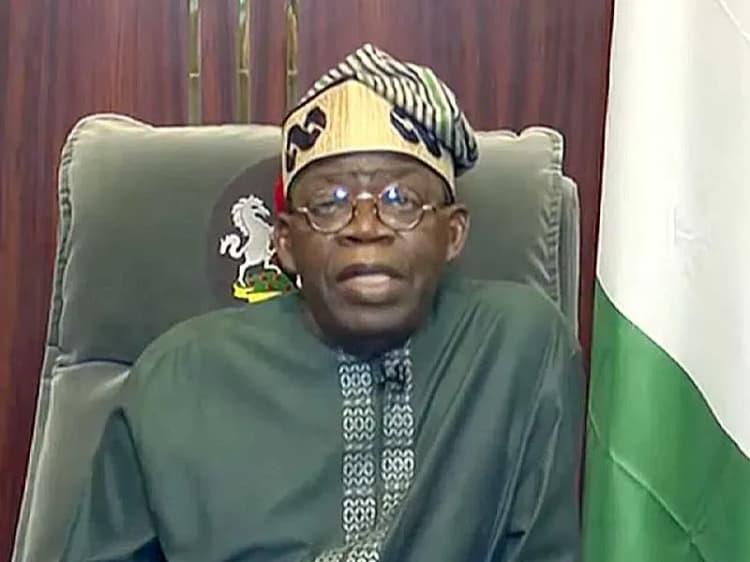
Why is this expression relevant to our discussion? What is happening in Nigeria today is akin to the fire of Rome; our president does not respond appropriately, focusing instead on his political ambitions. According to the presidency’s own statements, President Tinubu planned to attend the G20 summit in South Africa, despite a nation in crisis, but was stopped by a security advisory.
From all indications, for the president who prioritises politics over anything, the focus is on which governors or senators are joining the APC to secure the groundwork for his second term, rather than addressing the issues that are escalating around him. If attending the G20 will help him lobby the international community for his re-election, that seems to be his priority—not the ongoing violence against schoolchildren, a crisis that has persisted since 2009 and which previous presidents have managed to navigate. So why won’t he also?
Furthermore, why should the release of Nnamdi Kanu, the leader of IPOB, be a concern if doing so will not enhance the president’s chances for a second term? Suppose the northern leaders who originally through their late political idol Muhammadu Buhari arrested and detained Kanu support his continued incarceration. Why should he be released before the elections in 2027 to injure the President’s interests in the region? And if releasing Kanu will not help the southern solidarity being incubated by the President and his spin doctors, why release him, Instead, he should serve his imprisonment in Sokoto, the heartland of the Fulani Caliphate, a city with a predominantly Fulani population, where his treatment could align with the interests of the current regime.
Anyone observing the current trends in Nigeria, whether political or social, will agree that Nigeria’s democratic framework is struggling, with its systems appearing unfit for the road ahead. Democracy in Nigeria is hanging in the balance today. Several crises abound, and the future of democracy is in serious jeopardy; even an alternative to democracy is being discussed at beer parlours and other social gatherings. Sincerely democracy in Nigeria is currently hanging by a thread. Several crucial pillars that uphold democratic principles are being weakened or compromised. When citizens lose faith in the expectation of free, fair, and credible elections, the legitimacy of the entire system is undermined. This public cynicism can lead to disengagement from the political process. Obviously, in the country’s political landscape today, there is a lack of institutional integrity; the electoral bodies and judiciary have failed to provide the essential checks and balances needed to serve as referees and final arbiters of disputes. Consequently, the populace is wishing for alternatives.
President Bola Ahmad Tinubu underrated the danger inherent in his decision to prioritise politics over governance. He did not take into account that neglecting governance would also negatively impact his political future. Under Tinubu’s leadership, Nigeria is experiencing a severe threat to democracy on multiple fronts. The government has failed so drastically to provide governance that the situation has drawn international attention. The dire security conditions in Nigeria have even captured the notice of U.S. President Donald Trump, who has accurately labelled Nigeria as a “country of particular concern” (CPC) and a disgraced nation, opening the door for potential intervention to aid helpless and hopeless citizens.
The conversation has shifted; it is no longer about saving democracy because, in many ways, it is already dead and President Tinubu is acting as the undertaker, seemingly planning a fitting burial for a democracy that appears to no longer exist. The trend in Nigeria’s political landscape reflects a gradual backslide into authoritarianism, undermining key democratic institutions such as the judiciary, the press, and the electoral process. The repression of opposition parties removes necessary competition and alternative viewpoints essential for a healthy democracy. Without a viable opposition, the ruling power is not held to any meaningful accountability, often leading to authoritarianism. These conditions create a cycle where power becomes entrenched, institutions serve a select few, and the democratic balance is indeed jeopardised.
Furthermore, this environment leads to political gridlock, a decline in civility, and a breakdown of the consensus necessary for democracy to function. Misinformation and fabricated news, often amplified by social media and fueled by hired aggressors ( attack dogs), exacerbate the situation. As these issues unfold, significant wealth gaps and high-profile corruption scandals foster a public perception that the system is “rigged” in favour of elites. In corrupt political parlance, the saying goes, “What money cannot do, more money will do perfectly well,” even if it comes at the expense of the people’s interests.
Conclusively, let us therefore brace up to the fact that the looming storm is ominously close and demands our urgent attention. In moments of crisis, it is often our democratic institutions—free elections, the rule of law, and civil liberties—that face the greatest peril, becoming the first casualties in the relentless pursuit of authoritarian control. We must therefore confront the harsh reality that crises serve as both profound tests and existential threats to democratic governance. May we find guidance and strength in these troubling times.
- ABONYI is a columnist, former Group Political Editor, THISDAY, former Deputy Managing Director of New Telegraph, and Media Consultant. (First published by New Telegraph on Thursday, November 27, 2025)
