

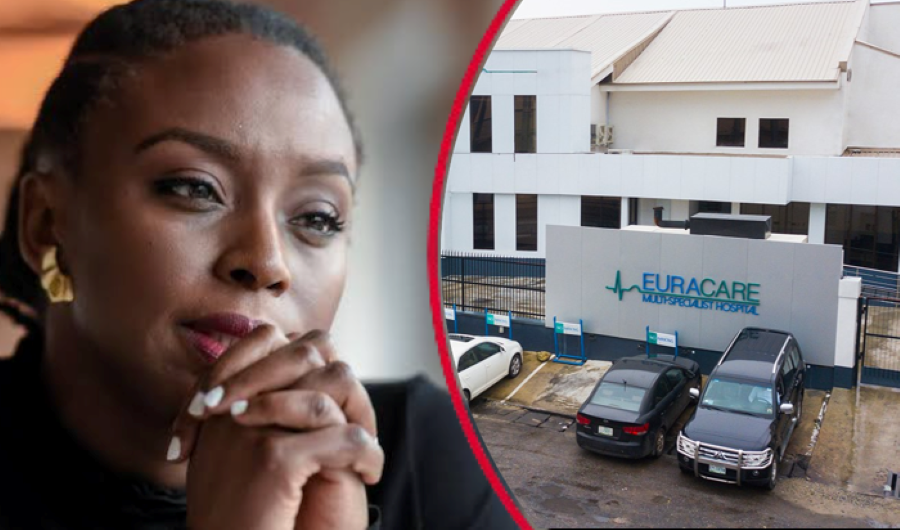
Nigerian author Chimamanda Ngozi Adichie has filed a ₦2.9 billion ($3+ million) lawsuit against a Lagos-based private hospital following the death of her 21-month-old son, a legal action that has thrust Nigeria’s private healthcare system into intense national and international scrutiny.
Court filings show that Adichie’s son, Nkanu Nnamdi Adichie-Esege, died on January 7, 2026, at Euracare Multi-Specialist Hospital in Lagos during a diagnostic procedure that involved sedation. The suit alleges gross medical negligence, accusing the hospital and its staff of failing to adequately monitor the child’s vital signs, lacking proper emergency preparedness, delaying life-saving intervention, and violating standard anaesthetic protocols.
The case has sparked widespread public outrage and prompted swift regulatory action. The Lagos State Government confirmed the suspension of the anaesthesiologist involved and announced a formal investigation into the hospital’s practices, as pressure mounts for accountability within Nigeria’s largely privatised healthcare sector.
The scale of the lawsuit has further intensified debate. In a widely circulated video, physician and health policy advocate Dr Richard Okoye broke down the components of the ₦2.9 billion claim, explaining that it includes general damages, compensation for emotional trauma, projected loss of life opportunities, refunds for medical services, and legal fees.
Dr Okoye warned that repeated claims of such magnitude could place severe financial strain on private hospitals and deter investment in a healthcare system already struggling with underfunding and workforce shortages.
“This tragedy must be addressed with justice and reform,” Okoye said, “but we must also be mindful of unintended consequences that could further weaken healthcare access.”
Beyond the courtroom, the case has reignited long-standing concerns over Nigeria’s doctor-to-patient ratio, fragile emergency care infrastructure, weak regulation of private hospitals, and growing fear of litigation among medical professionals.
While acknowledging the family’s right to pursue justice, Okoye cautioned against emotionally driven calls to shut down hospitals, arguing that such actions could worsen healthcare access for millions of Nigerians.
