

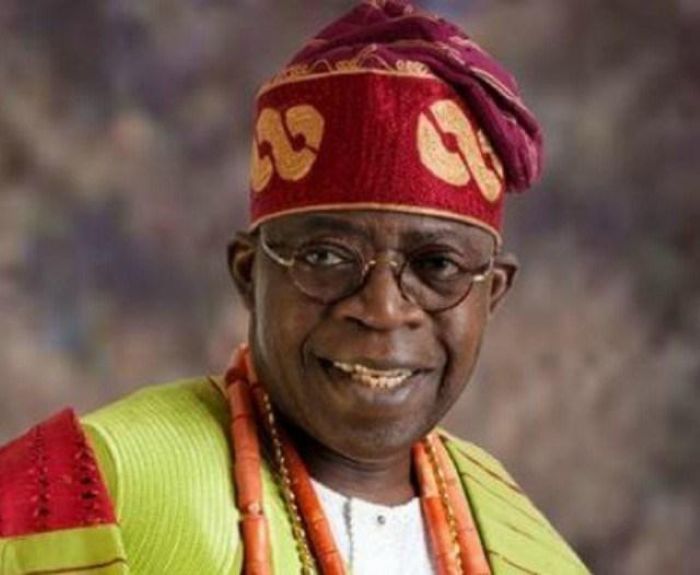
The President’s account of a water outage in the Presidential Villa has raised uncomfortable questions about public spending, official accountability and a government’s responsibility to provide basic services.
President Bola Tinubu says water stopped flowing while he was shaving at the Presidential Villa in Abuja. He recounted the incident at a family prayer gathering in Lagos on Sunday, November 22, saying even the occupants of Aso Rock were not spared Nigeria’s infrastructure problems.
“You know, on a Wednesday of last week, I was shaving, and the water went off. In the Villa,” he told the gathering. He added that the government would correct the failures of electricity and water supply, insisting: “We have just started. We can do it, and we will do it for Nigeria.”
The President may have intended the story as an illustration of the scale of Nigeria’s infrastructure crisis. But coming from the country’s highest office, the disclosure has raised a more immediate question: how does the Presidential Villa, sustained by billions of naira in public allocations, experience a basic utility failure serious enough for the President to recount it publicly?
The 2026 Appropriation Act provides ₦43.19 billion for State House Headquarters. Within that allocation, ₦311.09 million is earmarked for electricity, ₦15.92 million for water rates and ₦12 million for sewerage charges. The budget also allocates ₦4.23 billion for routine maintenance of mechanical and electrical installations, buildings, and other facilities within and around the Villa.
There is more. The budget provides ₦8.35 billion for outstanding liabilities, including obligations to Julius Berger, other maintenance work, FCT water charges, electricity bills, and waste disposal. It also allocates nearly ₦1.99 billion for generator fuel. These are substantial provisions for a complex whose occupants are expected to have reliable access to basic utilities.
These figures are budgetary allocations, not proof that every naira has been spent or that the funds were specifically intended to prevent the particular outage the President described. But they make the need for an explanation unavoidable. Was the interruption a temporary technical fault, a failure of the Villa’s water infrastructure, a supply problem, or a maintenance lapse? The Presidency has not explained.
And what of Nigerians outside the gates of Aso Rock? Across the country, households struggle to secure reliable water and electricity, often paying for boreholes, water vendors, generators and fuel to make up for services that public institutions are expected to provide. For many families, an interruption is not an inconvenient episode during a shaving routine; it can mean hours spent searching for water, additional household expenses and serious risks to health and sanitation.
Was the President mocking Nigerians by presenting his own experience as a shared hardship? His reported remarks do not establish that intention. Yet the comparison risks trivialising the very different circumstances of a President living in a heavily funded government complex and citizens who have neither the resources nor the institutional support available to the State House.
The more troubling issue is what the admission says about public accountability. If the Presidency cannot guarantee reliable water and electricity within its own premises despite the scale of public funding provided for its operations and maintenance, Nigerians are entitled to demand an account of how those allocations are being used.
Aso Rock should not be treated as an ordinary household where a tap can run dry and the matter ends with a complaint. It is the seat of the federal government, a symbol of public authority and one of the most generously funded government establishments. Its failures should trigger explanations, not anecdotes.
The President says Nigeria will correct its infrastructure problems. Nigerians have heard many such assurances. What they need now is evidence: functioning public utilities, transparent spending and measurable improvements in their daily lives.
A President whose shaving was interrupted by a water outage has offered an unusually personal account of Nigeria’s infrastructure deficit. The question is whether the government will turn that experience into an urgent lesson in accountability—or allow it to pass as another story from Aso Rock.
