

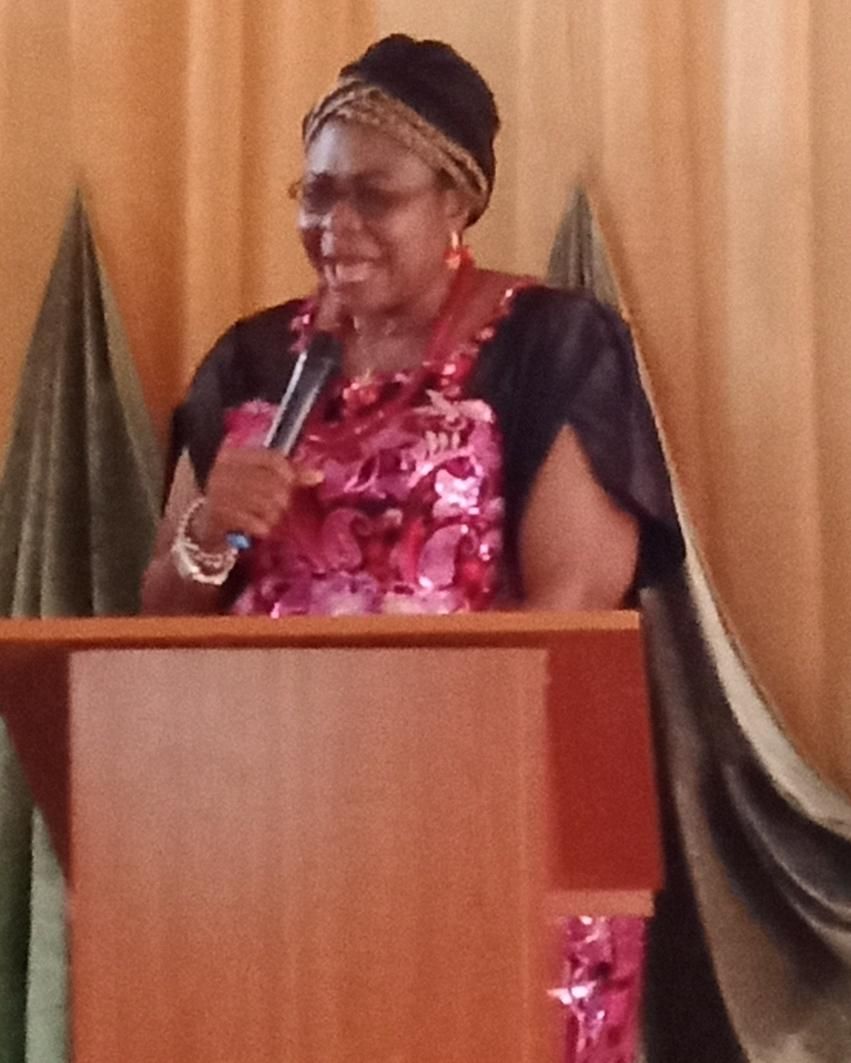
Prof. Florence Orabueze delivering the opening speech
By Tony Adibe
The Vice Chancellor, University of Nigeria, Nsukka (UNN), Prof Simon Ortuanya, has said that for Africa, and especially Nigeria, the Maritime Sector remains a critical pillar for economic growth, regional integration, and sustainable development.
Declaring open the 3rd International Conference (hybrid), themed, “From Global Maritime Regulations To Tangible Actions: Driving Sustainable Operations in the African Maritime Sector,” Prof Ortuanya said that Nigeria, and indeed, Africa’s ports, shipping systems, coastal resources, and blue economy initiatives must not only comply with international standards but must also be innovative, inclusive, and environmentally responsible.
The Vice Chancellor’s assertion comes as stakeholders at the conference also advocated for the effective implementation of maritime regulations in Africa to boost the blue economy.
NewsBits reports that the conference was organised by the Institute of Maritime Studies, University of Nigeria, Enugu Campus (UNEC).
A section of the participants
Ortuanya also spoke on the theme, which, he said, “Captures a fundamental challenge of our time: the transition from normative frameworks and models to practical implementation. Across the world, maritime regulations, whether relating to environmental protection, safety, trade facilitation, or security, have evolved rapidly. However, the real test lies not in the existence of these frameworks, but in their domestication, enforcement, and measurable impact, particularly within developing maritime economies like Nigeria.”
Represented by the Deputy Vice-Chancellor, Prof. Josephat Onwumere, Ortuanya lauded the Institute for sustaining a conference platform aligned with global maritime trends and best practices.
He explained that conferences such as this served as “vital platforms where academia, policy, and industry intersect, allowing us to interrogate existing systems, share experiences, and co-create solutions that are both globally informed and locally adaptable.”
“I am particularly pleased to note the breadth of sub-themes covered in this conference, from maritime governance and security, to environmental protection, logistics, innovation, and the blue economy,” he stated.
According to him, this multidisciplinary approach “reflects the inherent complexity of the maritime sector and reinforces the need for collaborative, cross-sectoral thinking in addressing its challenges.”
In her opening speech, Director of the Institute, Prof. Florence Orabueze, said that Africa was at a critical stage of maritime development, endowed with extensive coastlines, strategic shipping routes, and expanding port infrastructure. The Director said: “In spite of these developments, the continent is yet hindered by weak implementation of the established regulatory frameworks.’’
She said while policies are often well-articulated, their impact are undermined by poor execution or implementation. “The strength of policy is too weakened by ineffective implementation. This gap demands urgent attention if Africa is to realise its maritime potential,” according to Orabueze.
On the conference, she said that it was designed to move stakeholders beyond policy discussions to solutions that would provide sustainable, measurable, and impactful outcomes. She described the conference theme as timely and imperative.
In his address, Prof. Lucky Worika of Rivers State University, said that global maritime conventions, including safety, environmental, and operational regulations, remained ineffective without strong local enforcement mechanisms.
Worika however, outlined key challenges affecting maritime governance in Africa to include institutional capacity constraints, fragmented regulatory systems, infrastructural deficiencies, corruption, and weak inter-agency coordination.
He further suggested the need for integrated governance systems, improved port infrastructure, enhanced environmental compliance, increased investment in technology and regional cooperation in the system.
In his speech, the Managing Director, South East Development Commission (SEDC), Mr Mark Okoye, said maritime efficiency remained critical to economic growth, noting that 90 per cent of global trade were conducted in the sea.
Represented by the Executive Director, Natural Resources, Agriculture and Rural Development, Mr Clifford Ogbede, however, Okoye said that in spite of Nigeria’s role in the sector, the country faced the problem of inefficiency in logistics and port operations.
He said that the blue economy provided over $1.5 trillion opportunities annually across the world, and advised Nigeria to tap the benefit by investing in inland waterways, aquaculture, and related sectors.
