

By Tony Adibe
The SouthEast Human Rights Bureau (SEHRB), comprising the Oganihu Igbo Development Foundation and the International Society for Civil Liberties and Rule of Law (INTERSOCIETY), has again raised serious concerns about the alleged gross human rights violations committed in the southeast zone by Nigerian security forces and non-state actors, who attacked security agents and civilians too.
SEHRB, during a well-attended press conference in Enugu where it called for real accountability for the victims of forced disappearances, arbitrary arrests, torture, incommunicado detention, and cruel murder in cold blood by the perpetrators, mainly Nigerian security forces and non-state actors, who murder innocent people under the guise of Biafra agitation.
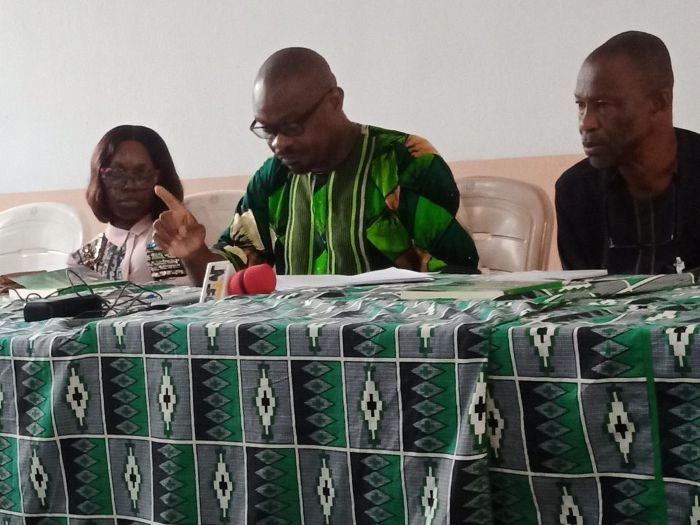
The press conference was attended by members of the media, representatives of civil society, public institutions, survivors, families of missing and detained persons, and other stakeholders.
Executive Director of RULAAC, Comrade Okechukwu Nwanguma, who read the jointly signed press statement to the gathering on Saturday, 17 October 2026, appealed to the Nigerian authorities to put an end to the challenges of rights violations being perpetrated chiefly by government security agencies – the police, military, DSS, and often, criminal elements in the South East.
Nwanguma said that the essence of the press conference was We have convened this press conference to ‘draw national attention to disturbing allegations of human rights violations’ arising from security operations in Southeast Nigeria.
The SEHRB said that such allegations of human rights included “arbitrary arrests, prolonged and incommunicado detention, torture, denial of access to lawyers and families, deaths in custody, enforced disappearances and the discovery of unidentified bodies in mortuaries” in the zone.
The Bureau said that they are particularly concerned about persons reportedly arrested in the Southeast and transferred to distant detention facilities, including the notorious Wawa Barracks in Niger State, Kuje and Suleja Custodial Centres, and facilities associated with the Department of State Services (DSS) and police tactical formations.
“Some families have searched for their relatives for years without official confirmation of their whereabouts, legal status or fate. We also condemn killings, abductions and other atrocities committed by armed separatist elements, criminal gangs and non-state actors operating under the guise of agitation. Their victims equally deserve justice.
“Our position is clear: the State has a duty to protect citizens from violence, but security operations must themselves comply with the law. Fighting lawlessness cannot justify lawlessness by the State,” said the Bureau as it insisted that Nigeria must learn from history; otherwise, she is bound to relive it.
- THE LESSONS OF HISTORY
Nigeria must learn from its history. The Nigeria–Biafra Civil War of 1967–1970 left profound wounds of death, displacement, starvation and unresolved grievances.
Rwanda’s experience following the 1994 genocide, although historically different, also demonstrates the importance of truth, documentation, accountability and remembrance.
A society does not overcome mass violence merely because the shooting stops. What it does afterwards with the truth, the dead, the missing, survivors and those responsible determines whether its wounds heal or are transmitted to future generations. Nigeria must not allow today’s violence and abuses in the Southeast to become another unresolved historical tragedy.
- SECURITY AND HUMAN RIGHTS ARE NOT MUTUALLY EXCLUSIVE
The Southeast has suffered devastating insecurity. Police officers, soldiers, traditional rulers, community leaders and ordinary citizens have been murdered. Public facilities have been attacked, and communities have endured abductions, extortion and violence.
Those responsible must be investigated and prosecuted in accordance with the law. However, legitimate security operations cannot justify arbitrary arrests, torture, collective punishment, unlawful detention or enforced disappearances. There must be no hierarchy of victims.
The civilian murdered by armed criminals matters. The police officer or soldier unlawfully killed matters. The detainee who disappears in State custody matters. The torture survivor matters. The unidentified dead matter. Every victim deserves truth, justice and accountability.
- ARREST MUST NEVER BECOME DISAPPEARANCE
When State agents arrest a person, they assume responsibility for that person’s safety, dignity and legal rights. Every arrest must be documented. The identity of the arresting agency, place of detention, legal basis for custody, and subsequent transfers must be ascertainable.
Detainees must have access to legal representation, family contact and judicial safeguards. No family should spend years searching police stations, military formations, DSS facilities, correctional centres, hospitals and mortuaries for a relative taken into State custody.
The testimonies presented today reveal recurring allegations that require urgent, credible and independent investigation. At the press conference, the huge audience was left speechless due to the jaw-dropping, mind-boggling documented evidence taken from families of victims and survivors of atrocities as provided by the Bureau.
- DOCUMENTED COMPLAINTS AND TESTIMONIES
Ozioma Elizabeth Onyeaka
Ozioma Elizabeth Onyeaka, a 35-year-old teacher from Anambra State, reportedly disappeared after attending a night church programme. For more than five years, her family searched unsuccessfully for her. They subsequently learned that she was alive and detained at Wawa Barracks, Niger State, after a lawyer encountered her in connection with terrorism proceedings.
RULAAC was informed that she appeared before the Federal High Court in Abuja on 16 June 2026. The authorities must explain who arrested her, where she was held, why her family could not establish her whereabouts for years, and the legal basis for her detention.
Sunday and Calista Ifedi
Sunday Ifedi and his wife, Calista, were reportedly arrested by the DSS in Enugu in 2021 and transferred to Wawa Barracks. Sunday regained his freedom after more than four years. Calista reportedly died in custody. According to allegations attributed to Sunday and human rights activist Omoyele Sowore, she was buried in a shallow grave at Wawa Barracks.
These grave allegations require an independent investigation. The authorities must establish the circumstances of her death, disclose relevant medical and custody records, identify her burial location, and ensure that her family receives the truth and appropriate remedies. If confirmed, her remains should be recovered and released for dignified burial, and those responsible for any unlawful acts held accountable.
Esther Okwudili Egbom
Mrs Esther Okwudili Egbom was reportedly arrested by DSS operatives during a night prayer programme in Aba, Abia State, on 12 February 2025. According to her daughter, Chiamaka, the operatives were searching for another person who escaped before their arrival.
Mrs Egbom was allegedly arrested because she owned the ministry where the operation occurred. Her family says it has not seen her since. Chiamaka also alleges that her brother was beaten during the operation and subsequently died. The DSS must account for Mrs Egbom’s whereabouts and legal status and investigate the allegations surrounding the operation. Arresting a person in place of another is unlawful.
Chidiebere Echefu
Mrs Uloma Chidi Echefu alleges that DSS operatives arrested her husband, Chidiebere Echefu, at their home on 7 November 2021. She says he was denied family contact and independent legal representation for nearly five years before his recent remand at Kuje Custodial Centre.
His prolonged absence has imposed severe emotional and financial hardship on his wife and five children. The authorities must disclose his detention history, the judicial orders authorising his custody, the charges against him and the reasons for his prolonged isolation.
Ifeanyi Thomas Arinze
Mrs Ozioma Adaku Arinze says her husband, Ifeanyi Thomas Arinze, was taken from their home in Owerri by persons she identifies as DSS operatives in November 2021. She has neither seen nor heard from him since. The DSS must investigate the reported arrest, account for his whereabouts, and disclose his legal status.
Chinyere Blessing Nwachukwu’s Missing Husband
Mrs Chinyere Blessing Nwachukwu recounts that police officers arrested her husband at their home in Port Harcourt in 2021. After months of searching, she received information from former detainees indicating that he had been held at Tiger Base in Owerri.
Despite repeated accounts from persons who claimed to have seen him there, officers allegedly denied holding him. She subsequently encountered photographs of her husband circulating on social media, raising fears about his fate. For five years, she and her children have lived without answers.
Her testimony raises serious questions about possible unacknowledged detention and enforced disappearance. The Nigeria Police Force must identify the arresting officers, reconstruct his custody history, examine Tiger Base records, and establish whether he is alive. If he died following arrest, the circumstances must be independently investigated, his remains identified and his family informed.
Abel Onyedikachi Ugwuoke
Abel Onyedikachi Ugwuoke reportedly disappeared on 8 December 2024 after leaving his family compound on a motorcycle. His family later received information that he was being held at Kuje Custodial Centre in Abuja.
They say they were never officially informed of his arrest, the allegations against him or the circumstances of his detention. His family has also expressed concern about his physical and mental condition. The authorities must confirm his custodial status, disclose the relevant court proceedings and facilitate legal, family and medical access.
Ifeyinwa and Her Missing Husband
Ifeyinwa alleges that officers attached to Tiger Base arrested her, her husband and their children in Orlu in 2021 while searching for her son. She further alleges that their home, church and maternity facility were destroyed.
She says she and her husband were tortured and subsequently transferred to an Intelligence Response Team facility in Abuja. She was reportedly released after nearly two years, but her husband remains missing. The police must account for his whereabouts and investigate the allegations of torture, arrest in lieu, and destruction of property.
Adaeze’s Account of Torture
Adaeze alleges that officers from Tiger Base arrested her in Orlu in February 2021 after falsely identifying her as an IPOB treasurer. She reports severe torture, including being tightly bound, physical injuries, and vomiting blood. She was subsequently transferred to Abuja and later to Suleja Custodial Centre.
Five years later, she says she continues to suffer serious health complications. Her allegations require independent investigation, medical rehabilitation and effective remedies.
Ngozichukwu’s Account of Torture
Ngozichukwu alleges that officers associated with the Intelligence Response Team abducted her and transferred her to Abuja. She describes severe torture, fractured wrists, untreated injuries, starvation, and degrading detention conditions.
She says she was accused of contributing money towards medical treatment for persons injured during the EndSARS protests. These allegations require independent investigation and appropriate medical, psychological and legal remedies.
Okechukwu Paul
Mrs Peace Paul reports that DSS operatives arrested her husband, Okechukwu Paul, in October 2021. She has neither seen nor heard from him since. The DSS must establish his whereabouts and account for what happened following his reported arrest.
Ezugwu Paul Ejike
Mrs Ezugwu Ndidiamaka Perpetual reports that unidentified persons took away her husband, Ezugwu Paul Ejike, on 5 December 2024. His whereabouts remain unknown. Although the perpetrators have not been identified, the State has a duty to conduct an effective investigation and determine his fate.
- A DISTURBING PATTERN REQUIRING INDEPENDENT INVESTIGATION
Although these testimonies concern different individuals and circumstances, they reveal recurring allegations of:
– Night-time raids, arbitrary arrests and arrests in place of wanted persons.
– Transfers to distant detention facilities without notification to families.
– Prolonged detention without prompt judicial oversight or meaningful legal access.
– Torture, degrading treatment and denial of medical care.
– Failure to acknowledge custody or disclose detainees’ whereabouts.
– Deaths in custody, alleged secret burials and missing persons.
– Severe psychological, social and economic consequences for families.
These allegations must be independently verified. Where substantiated, they may constitute serious violations of constitutional rights, the Anti-Torture Act 2017, the Administration of Criminal Justice Act 2015 and Nigeria’s international human rights obligations.
Where the legal elements are established, prolonged unacknowledged detention or concealment of a person’s fate or whereabouts may amount to enforced disappearance. National security cannot become a justification for placing citizens outside the protection of the law.
- THE UNIDENTIFIED DEAD IN IMO STATE
We are equally concerned about reports of large numbers of unidentified bodies in mortuaries in Imo State, including allegations that some may be connected to security operations, unlawful killings, or disappearances. These reports require a credible, independent forensic investigation.
The authorities must establish the number and identities of the deceased, the circumstances of their deaths, how their bodies reached the mortuaries, and whether any were previously held by security agencies. Mortuary registers, police records, autopsy reports and other relevant evidence must be preserved.
Families searching for missing relatives should have access to a transparent identification process, including appropriate DNA testing. No unidentified body should be disposed of in circumstances that could destroy evidence or frustrate identification.
The SEHRB made a passionate appeal to the Nigerian Federal Government, Inspector General of Police, Director General of the DSS, the Chief of Defence Staff, Attorney General of the Federation, the Human Rights Commission and others to do the needful and save innocent citizens.
- OUR DEMANDS
We call on the Federal Government, the Inspector-General of Police, the Director-General of the DSS, the Chief of Defence Staff, the Attorney-General of the Federation, the National Human Rights Commission and other relevant institutions to take the following steps:
First, establish an independent investigative mechanism to examine reported disappearances, prolonged incommunicado detention, torture and custodial deaths connected with security operations in the Southeast. Second, conduct a comprehensive audit of detention facilities, including Wawa Barracks and relevant police, military and DSS facilities, to identify all persons held, their legal status, custody history and access to judicial safeguards.
Third, account for every missing person reportedly taken into State custody. Relevant agencies must disclose arrest, transfer, detention, release and death records and cooperate fully with independent investigators.
Fourth, investigate reported deaths in custody and unidentified bodies, preserve forensic evidence, identify remains and ensure that affected families receive credible information and appropriate remedies.
Fifth, guarantee access to justice. Every detainee must be promptly brought before a competent court, afforded legal representation, and protected from torture, arbitrary detention, and unlawful transfers. Sixth, investigate and prosecute perpetrators of serious violations, including security personnel and non-state actors, wherever credible evidence establishes criminal responsibility.
Seventh, provide effective remedies for victims and families, including medical and psychosocial rehabilitation, compensation where legally warranted, restitution and guarantees against recurrence.
Eighth, establish a Southeast Missing and Disappeared Persons Documentation and Response Mechanism, working with families, human rights organisations, legal professionals, forensic experts and relevant public institutions. Ninth, strengthen civilian oversight of security operations through effective custody documentation, independent monitoring, enforceable safeguards against torture and transparent accountability procedures.
- A CALL FOR TRUTH, JUSTICE AND NATIONAL RESPONSIBILITY
We recognise the enormous security challenges confronting Nigeria and acknowledge the sacrifices of law enforcement and military personnel who discharge their duties lawfully. But the legitimacy of security institutions depends not only on their ability to confront violence but also on their respect for the rights and dignity of the people they are established to protect.
The families represented here are not asking for special privileges. They are asking questions that every government has a duty to answer.
“Where are our husbands, wives, sons, daughters, and relatives?
Who arrested them?
Where were they detained?
Were they charged before a court?
Are they alive?
If they died, how, when, and where did they die?
Who is responsible?
These questions cannot be answered by silence, intimidation, or indefinite delay.
“We call on the National Assembly, the National Human Rights Commission, the Nigerian Bar Association, the media, civil society, religious and traditional leaders, and the international human rights community to support credible investigations and sustained accountability.
We also urge families and witnesses to continue documenting and reporting abuses while ensuring that sensitive information is handled responsibly and survivors are protected against reprisals. “We seek neither revenge nor impunity. We seek truth, justice, accountability, and guarantees that these violations will not recur.
“The missing must be accounted for.
The detained must have access to justice.
The dead must be identified and treated with dignity.
The perpetrators of unlawful acts, whether State agents or non-state actors, must be held accountable.
And the families who have endured years of uncertainty must finally receive answers.
A nation that cannot account for those taken into its custody cannot claim to uphold the rule of law.
“Thank you.
Signed:
“Southeast Human Rights Bureau (SEHRB), Oganihu Igbo Development Foundation
International Society for Civil Liberties and Rule of Law (Intersociety)”
- RULAAC’S Executive Director Okechukwu Nwanguma (middle) flanked by other members of the Bureau during the press conference… Photo Credit: Tony Adibe
