

By Tony Adibe
The National Drug Law Enforcement Agency (NDLEA) has said that over 360,000 youths in Enugu State are actively hooked on hard drugs, a staggering figure that represents about 13.4 per cent of the state’s entire youth population.
The incredible statistics highlight a disturbing public health and security crisis in the southeastern state, where narcotic consumption has aggressively breached traditional boundaries, trickling down from tertiary institutions into secondary and primary school classrooms.
The Deputy Commander of Narcotics and Drug Demand Reduction for the NDLEA Enugu State Command, Mr. Owunwa Ibezimako, who made the disclosure, warned that the data reflects a severe breakdown of societal guardrails.
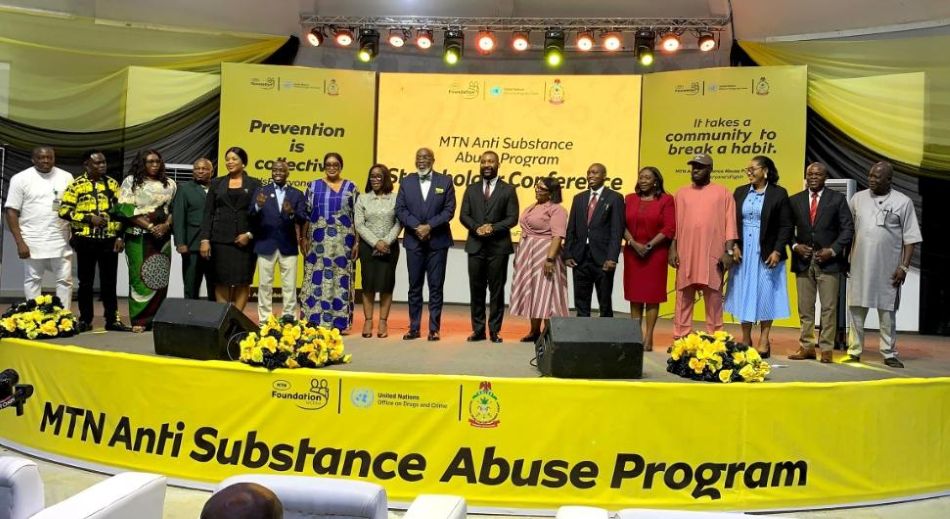
Ibezimako spoke during the MTN Anti-Substance Abuse Programme (ASAP) Stakeholders’ Conference held at the International Conference Centre, Enugu, and the figures have fuelled intense conversations among policymakers, law enforcement officials, and civil society groups.
Themed, “It’s Everyone’s Fight,” the Stakeholders’ conference pointed at the urgent need for structural interventions to rescue Nigeria’s youngest demographic from the snare of narcotic dependency.
NewsBits reports that, supported by trained psychologists and psychiatrists, the digital call centers are designed to offer anonymous, safe spaces for individuals seeking help to navigate their way out of addiction without fear of legal reprisal or social disgrace. Also, equipped with fresh empirical data and reinforced corporate alliances, stakeholders left the Enugu summit with a unified mandate: to actively dismantle the quiet ecosystem feeding the state’s drug crisis, one community at a time.
Ibezimako further explained that the survey, conducted jointly by the NDLEA and the United Nations Office on Drugs and Crime (UNODC), clearly positions illicit substances as the ultimate catalyst for the regional insecurity plaguing communities.
“Drugs and crime are not strange bedfellows,” Ibezimako told the huge gathering comprising community leaders, religious leaders, and students. He was quick to add: “For every organised crime recorded in Nigeria, drugs are either the enablers or the enhancers. This conference could not have come at a better time because the vulnerability of our children is scaling up at a speed that demands immediate, aggressive containment.”
As a way of reducing the menace, Ibezimako highlighted that under the national leadership of Brig.-Gen. Mohammed Buba Marwa (rtd.), the NDLEA has rolled out sweeping demand-reduction frameworks, including the War Against Drug Abuse (WADA) campaign and the Save Our Families (SOF) initiative. He said that a strict national policy is now active, mandating rigorous drug tests for newly admitted university students and incoming government workers, while a fresh preventive curriculum is being pushed for deployment in local schools.
The urgency of the situation was strongly echoed by the Executive Director of the MTN Foundation, Mrs. Odunayo Sanya, who detailed the company’s massive investments aimed at insulating Nigerian youths from early-stage exposure to illicit substances. Since its inception in 2004, the Foundation has funnelled over N33 billion into transformative health, education, and youth empowerment initiatives, directly impacting more than 33 million lives nationwide.
Sanya, who became rather emotional while reflecting on the human cost of the crisis, spoke of how easily young talent is erased once they walk into local drug dens. She said that deep within these subterranean spaces, victims are stripped of their identities and given strange aliases by syndicates, effectively killing their past lives.
”When they get into those dens, they give them a new identity,” explained Sanya, who added, “You can go in there and say you are looking for them by their government names, but nobody knows who they are. The person you knew died the day they stepped into that place. That is the tragedy that fuels our fire at the MTN Foundation to ensure we shrink the number of first-time users.”
Spurred by a desire to stop the “addiction bucket” from swelling like a balloon, the MTN Foundation launched the ASAP initiative in 2019 alongside the NDLEA and UNODC, specifically targeting secondary school students before destructive habits can crystallize. To date, the anti-substance campaign has built a formidable defense network, directly reaching over 50,000 students, training 1,556 educators, and deploying public awareness campaigns that have reached an estimated 100 million Nigerians.
Sanya emphasized that because a staggering portion of Nigeria’s population centers around a median age of 17, human capital remains the nation’s supreme asset—far eclipsing any mineral resources buried in the soil. She pointed out that providing economic alternatives is vital to keeping youths away from peer-driven vices, prompting the Foundation to offer free digital and tech training via the MTN Skills Academy to prepare teenagers for the modern global workforce.
Besides capacity building, the MTN Foundation executive highlighted the Foundation’s aggressive push into grassroots healthcare infrastructure, stressing that 49 primary healthcare centers were fully revitalized across Nigeria over the past year alone. These centers provided critical medical access to over 500,000 citizens, facilitated the safe delivery of 12,000 infants, and ensured the immunization of over 200,000 children against preventable diseases.
In Enugu State specifically, the Foundation’s footprint has manifested in the comprehensive remodeling of core science laboratories at Union Boys’ Secondary School, Okunanaw, alongside digital equipment grants distributed to dozens of young entrepreneurs.
Furthermore, healthcare facilities like the Cottage Hospital in Aninri, the Model Primary Healthcare Centre in Amadi Amuke, and centers across Enugu South and North have received significant infrastructural upgrades.
However, while delivering the keynote address on behalf of Enugu State Governor Peter Mbah, the Secretary to the State Government, Prof. Chidiebere Onyia, argued that substance abuse must no longer be viewed through a narrow medical lens. Instead, the state administration classifies the scourge as a multi-dimensional security, economic, and developmental obstacle that threatens to derail human capital advancement.
Onyia shared sobering reflections from his past career as a school principal and educator in the inner cities of Southern California, drawing parallels between the historical gang and narcotic cycles of Los Angeles and the emerging vulnerabilities currently creeping into Nigerian neighborhoods.
The SSG said that once addiction establishes roots within a community, it degrades entire generational lines, transforming localized crime into an institutionalized norm.
Onyia said: “We are not quite at that terminal point yet as a country, but we cannot afford to wait until the fire reaches our own living rooms before we fight it.” He added: “You might think it is a neighbor’s problem, but when you send your children away to universities or even high schools today, they are stepping into highly vulnerable spaces where these enablers are actively waiting.”
Onyia lauded the systemic framework of the MTN ASAP project, praising its deliberate focus on early intervention, but also emphasised the absolute necessity of institutional de-stigmatization.
The SSG insisted that breaking the cycle of addiction requires a compassionate shift toward public health systems, counseling, and structured social reintegration rather than punitive isolation or societal condemnation.
Onyia further challenged the state’s paramilitary and security coordinators to refine their tactical approaches, lightheartedly questioning the traditional, rough training methods displayed during live drug-bust simulations at the venue. He stressed that as security agencies work to cut off supply chains, their behavioral approach toward handling afflicted young people must remain humane, ensuring that rehabilitation takes precedence over criminal branding.
To counter the environmental pull toward narcotics, Onyia pinpointed the Enugu State Government’s massive infrastructural investments, including the ongoing construction of 267 “Smart Green Schools” across every single political ward in the state. The specialized educational hubs are strategically engineered to equip the next generation with advanced technological competencies, vocational values, and alternative life paths designed to neutralize destructive vulnerabilities.
The conference, nonetheless, made a collective call to action for all tiers of society—including parents, traditional rulers, religious institutions, and the media—to take personal ownership of the anti-drug campaign. As part of its 2026 tactical expansion, the MTN Foundation confirmed it is rolling out intensive stakeholder roundtables across Abuja, Kwara, Kaduna, and Enugu, while continuously funding the NDLEA’s specialized anti-substance helpline.
