

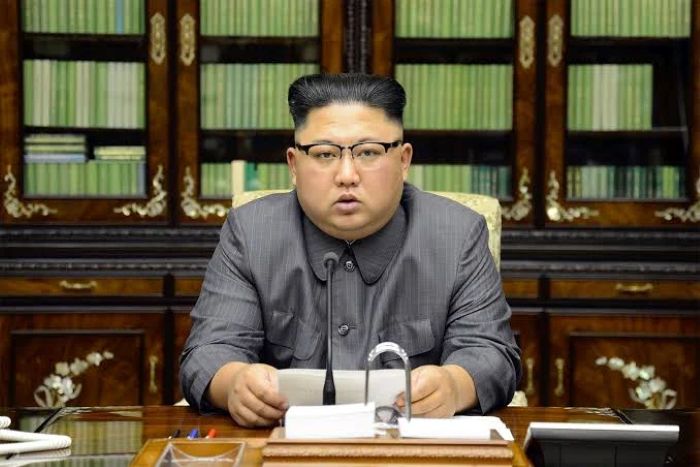
North Korea fired more than 10 short-range ballistic missiles towards the East Sea on Thursday, hours after US President Donald Trump announced plans to meet North Korean leader Kim Jong Un later this year. South Korea’s Joint Chiefs of Staff said the missiles were launched from the Pyongyang area at about 5:00pm and flew approximately 300 kilometres.
The launches came as South Korea and the United States conduct a shortened version of their annual Ulchi Freedom Shield military exercises, which Pyongyang has repeatedly condemned as preparations for an invasion.
Trump had announced on Wednesday that he planned to meet Kim again, saying it was important for the two countries to “get along.” He also claimed that North Korea had 57 “very powerful” nuclear weapons, although Seoul estimates that Pyongyang possesses between 80 and 120.
Following Thursday’s launches, South Korea’s presidential office convened an emergency security meeting, condemned the missile tests as violations of United Nations Security Council resolutions and ordered heightened military readiness.
The latest escalation came shortly after Seoul announced that the joint military exercises would end on Friday, about a week earlier than initially planned, following a suggestion from the United States. The Pentagon said the reduced drills would not affect US training objectives.
Trump’s decision to scale back the exercises and his renewed focus on diplomatic engagement with Kim have raised concerns among some US allies in Asia, while also generating speculation about Washington’s efforts to secure a foreign policy breakthrough.
Kim’s powerful sister, Kim Yo Jong, said on Wednesday that her brother had “good memories and feelings” about Trump and described the relationship between the two leaders as excellent. However, she said she was unaware of any current communication between them.
The United States maintains about 28,500 troops in South Korea as part of its defence commitment to the country, a legacy of the 1950-53 Korean War, which ended with an armistice rather than a peace treaty. South Korean Defence Minister Ahn Gyu-back said Seoul remained opposed to formally recognising North Korea as a nuclear-weapon state.
Asked whether Washington had abandoned its goal of de-nuclearising North Korea, Ahn said he did not believe so. South Korean President Lee Jae Myung, who has advocated stronger domestic defence capabilities to reduce the country’s reliance on the United States, said he would do his utmost to support Trump’s efforts to pursue peace with North Korea.
