

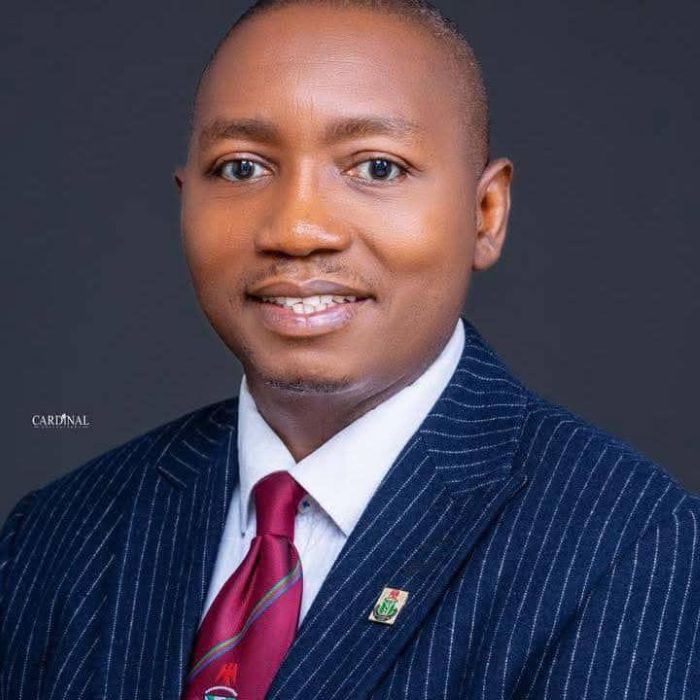
Enugu State Commissioner for Health, Prof. George Ugwu
Enugu State Commissioner for Health, Prof. George Ugwu, has clarified concerns over a perceived rise in kidney and cardiovascular diseases in the state, attributing the said increase largely to growing public awareness, improved access to health information, and increased testing.
Ugwu said more people were now becoming conscious of their health and presenting themselves for medical examinations, making previously undetected cases more visible. The commissioner stated this during a live interactive program, “The Conversation,” aired on 100.3 Udoka FM, Enugu.
Ugwu, however, warned that lifestyle choices, poor nutrition, obesity, physical inactivity and the indiscriminate use of medicines remained significant risk factors for kidney and cardiovascular complications, urging residents to pay greater attention to what they eat, particularly warning against excessive consumption of sugary, salty, oily, highly processed and packaged foods.
He advocated a return to locally produced foods, saying many traditional Nigerian meals were nutritionally superior to some heavily processed alternatives. The commissioner cited ‘Ayaraaya oka’, a local meal made from mashed maize and common among the Nsukka natives of Enugu State, as an example of a traditional food capable of providing several essential nutrients when properly prepared.
He expressed concern that some Nigerians increasingly associate expensive and heavily processed foods with affluence and good living, stressing that excessive consumption could contribute to obesity and other health complications.
Ugwu therefore advised people, particularly those aged 40 and above, to become more conscious of their calorie intake and maintain a healthy body weight, saying that many people ate more than their bodies required, adding that those who had attained some level of financial stability often became more exposed to excessive eating, alcohol consumption, and other unhealthy lifestyle habits, not knowing the adverse effects.
The commissioner also expressed concern about the eating habits of young people, especially students who rely heavily on noodles and other convenience foods without incorporating vegetables, proteins and other essential nutrients. He said the challenge was not always poverty but also ignorance, noting that some people spent considerable amounts on snacks and other junk foods while neglecting healthier and more affordable meals.
Ugwu further urged residents to engage in regular physical activity, stressing that exercise was an important component of preventing lifestyle-related diseases. He also identified the indiscriminate use of medicines, particularly self-medication and abuse of painkillers, as another serious threat to kidney health.
He cautioned residents against purchasing and taking medicines without appropriate medical advice, stressing that orthodox medicines should be obtained from credible sources and used according to prescribed dosages. Responding to a question on the abuse of herbal medicines amid concerns over the circulation of fake orthodox drugs in the country, the commissioner said the two issues should not be treated as alternatives.
He said the Enugu State Government was working towards strengthening the regulation of medical products and facilities while also developing a system through which medical supplies could be sourced directly from manufacturers. According to him, the state was “driving towards ensuring that all medical supplies are gotten directly from the manufacturers,” describing the model as part of efforts to improve the safety and quality of medicines available to residents.
Ugwu said regulation remained a major challenge in the health sector but noted that the state Ministry of Health was intensifying efforts to ensure that health facilities and medical products complied with required standards. He also pointed to the role of the National Agency for Food and Drug Administration and Control in combating fake medicines, including the use of verification codes on some pharmaceutical products.
The commissioner advised residents to patronise authorised outlets and seek professional guidance before taking medicines. He particularly warned against the practice of rushing to pharmacies or medicine shops to obtain over-the-counter drugs without consulting a doctor. Ugwu said some commonly abused painkillers could cause significant damage to the kidneys when used indiscriminately or for prolonged periods.
He also cautioned against comparing regulated pharmaceutical products, which undergo rigorous testing before approval, with herbal preparations whose ingredients, dosage and safety profiles may not have been adequately established. He explained that pharmaceutical products pass through several stages of research and clinical testing before being approved for human use, whereas many herbal preparations may lack clearly established dosage patterns and sufficient scientific evidence regarding their safety and efficacy.
The Enugu State Commissioner for Health also used the opportunity of the radio program to restate Governor Peter Mbah’s commitment to improving access to healthcare for all residents of the state. Ugwu said the administration’s investment in healthcare was deliberate and aimed at ensuring that residents could access quality and affordable medical services across the state.
“The Peter Mbah administration is very intentional about health because he’s a leader that cares. The governor understands that for every other sector of the economy to grow, you must have a healthy population of both old and young residents,” he said.
He said the government’s investments cut across the primary, secondary, and tertiary levels of healthcare. “That’s why, from the primary to the secondary as well as the tertiary levels of healthcare, you can see the massive investment being made by this administration,” Ugwu said.
According to him, ultramodern Type-2 hospitals are being built in each of the 260 political wards of the state, while major tertiary health institutions are also receiving significant attention.
“That’s why ultramodern Type-2 hospitals are being built in each of the 260 political wards of the state, just as ESUT Teaching Hospital, Park Lane and the SUMAS Teaching Hospital, Igbo Eno, are experiencing massive investments,” he said.
Ugwu added that the World-Class Enugu International Hospital would soon be commissioned, while various general hospitals across the state were also receiving attention.
“You can see that health is only second to education in Enugu’s consecutive annual budget,” he said.
The commissioner said the administration’s ambition extended beyond reducing medical tourism, stressing that the ultimate objective was to make quality healthcare more accessible and affordable to residents.
“What the Mbah administration is trying to achieve is not only to end medical tourism or to make Enugu the medical hub for Africa, but also to ensure affordable access to healthcare,” he said.
Ugwu therefore urged residents not to panic over the perceived rise in kidney and cardiovascular diseases but to take advantage of the healthcare facilities being provided by the government.
“I therefore call on ndi Enugu not to panic over the perceived rise in kidney and cardiovascular diseases, but rather to take advantage of the health facilities being put in place by the government,” he said.
On whether poverty could prevent residents from consulting medical professionals before taking medicines, the commissioner said ignorance remained a more fundamental challenge.
He acknowledged that some patients might be unable to afford subsequent treatment after consultation but urged them to make qualified medical practitioners their first point of contact whenever they had health concerns. Ugwu said an initial consultation could provide a patient with important guidance, even where the person could not immediately afford further treatment. He therefore advised residents against beginning treatment with self-prescribed medicines or indiscriminate laboratory tests.
