

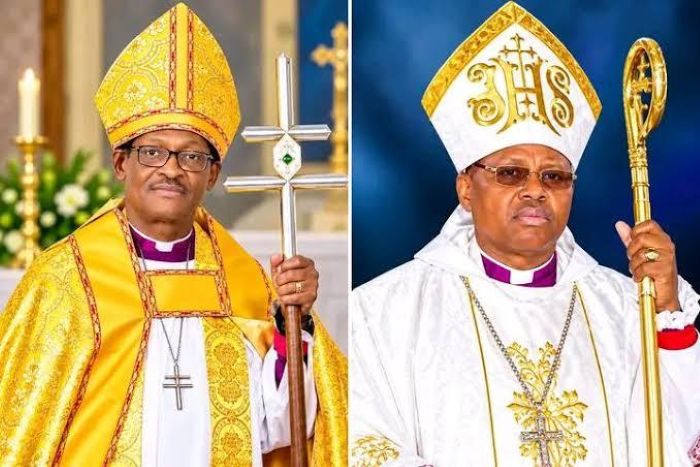
The Archbishop of Awka Diocese discontinues legal action against two top Anglican leaders, raising hopes of an amicable settlement and restoration of unity within the Church of Nigeria.
The Archbishop of the Anglican Diocese of Awka, Most Rev. Alexander Chibuzo Ibezim, has withdrawn his lawsuit against the Primate of the Church of Nigeria (Anglican Communion), Most Rev. Henry C. Ndukuba, and the Dean of the Church, Most Rev. Blessing Enyindah, in a development that could pave the way for an amicable resolution of the dispute.
The withdrawal is seen as a significant step towards resolving the disagreement through dialogue and reconciliation rather than prolonged legal confrontation. The development was conveyed in a Notice of Discontinuance/Withdrawal of Suit filed at the High Court of Anambra State, Awka Judicial Division, in Suit No. A/371/2026.
In the notice dated Friday, November 13, 2026, and signed by the plaintiff’s counsel, Chief B.E.I. Nwofor, SAN, Archbishop Ibezim, formally notified the court of his decision to discontinue and withdraw the suit to allow room for an amicable resolution of the dispute.
The suit was instituted against Ndukuba, who is the Archbishop, Metropolitan and Primate of All Nigeria, and Enyindah, who serves as the Dean of the Church of Nigeria and chairman of the visitation team to the Diocese of Awka.
The legal dispute arose from the constitution of a visitation team by the Primate, which Archbishop Ibezim had challenged on grounds of its legality. Specifically, the Awka diocesan bishop questioned the constitution of the team by the first defendant in a letter dated June 17, 2026.
However, his decision to withdraw the case signals a possible shift towards dialogue and mutual understanding among the senior Church leaders. The development is expected to create an opportunity for the parties to address their differences through the established structures of the Church and work towards restoring cordial relationships.
It could also help ease tensions within the Anglican Communion, particularly at a time when unity, institutional stability and confidence in the Church’s leadership remain important considerations.
Disagreements involving senior clerics can have wider implications for the Church, its clergy and congregation. Consequently, an amicable resolution would be significant in preserving the unity and spiritual integrity of the institution.
Nevertheless, the Notice of Discontinuance does not disclose the specific terms of any proposed settlement or indicate whether the parties have already reached an agreement. It also remains unclear whether a formal reconciliation process has commenced or what arrangements may be adopted to resolve the substantive issues that led to the litigation.
The withdrawal, however, marks an important development in the dispute, with attention now shifting to whether the parties can translate the decision into a lasting and mutually acceptable settlement.
