

By Nnamdi Ukasanya
There is a difference between having the opportunity to serve and possessing the disposition to serve. Public office may enlarge a person’s capacity, but the willingness to serve is a question of character. A political title does not automatically confer compassion, just as legislative seniority does not necessarily translate into generosity.
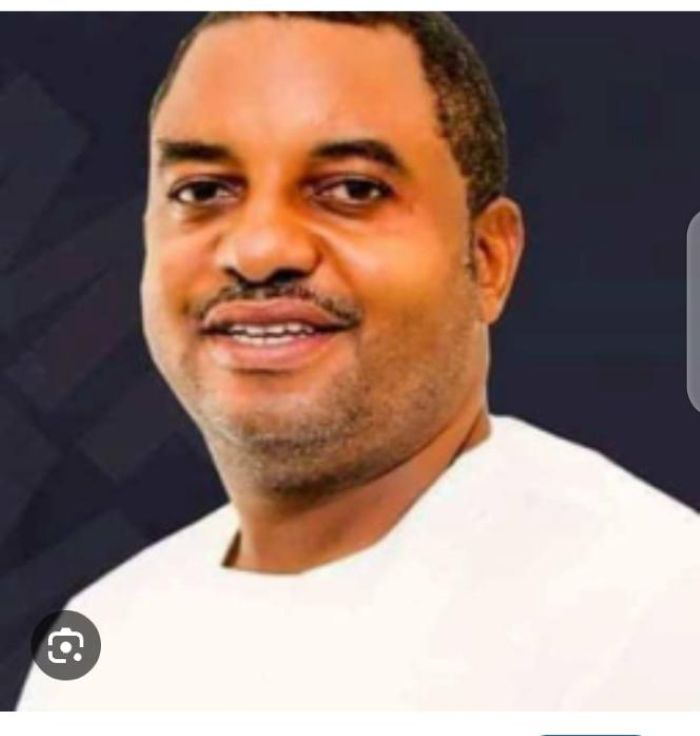
The member representing Ahiazu Mbaise/Ezinihitte Federal Constituency in the Green Chamber of Nigeria’s National Assembly, and the candidate of Youth Progressives Party (YPP), Rt. Hon. Emeka Martins Chinedu’s commitment to mobile medical services, initiated before his election and fulfilled after assuming office, demonstrated that his conception of service preceded his acquisition of political power.
Perhaps this explains why some have resorted to disparaging his interventions, including the mobile clinics and the two trailer-loads of rice distributed to the people. Aesop’s fable of the fox and the grapes offer a fitting literary illustration: what the fox could not reach, it dismissed as sour. That is precisely the psychology at play. When people lack the capacity to replicate an achievement, they often find it easier to discredit than acknowledge it. More importantly, by diminishing these interventions, they hope to lower the electorate’s expectations and evade the pressure to deliver anything comparable. After all, it is easier to ridicule what you cannot do than explain why you cannot do it. But the inability to replicate an achievement does not diminish its value.
Our people must understand that the National Assembly is not a rehabilitation centre. It is not an institution designed to establish individuals financially or serve as a vehicle for personal enrichment. Some lawmakers enter public office with established businesses, professional accomplishments and personal resources; others enter with little or nothing, expecting political office to become their pathway to wealth. The misconception that securing a seat in the National Assembly is equivalent to holding the key to the Central Bank has fuelled desperate political manoeuvres, manufactured narratives and questionable commitments. It also explains why some candidates promise to surrender their four years’ salaries merely to secure the support of political mercenaries with a devil-may-care attitude, willing to manipulate and dance naked to secure a mandate when it is obvious there is no vacancy.
Consider the political history of our former representative. He served as an aide to colleagues in both the Imo State House of Assembly and the National Assembly. After 12 years in legislative service, what demonstrable evidence exists of the personal economic establishment those years produced? Did the position make him a quadrillionaire? Or is he concealing his wealth while waiting for party funding before he can convene a meeting? Wealth is not the measure of legislative performance, yet that appears to be how desperate candidates and their supporters assess it. The unhealthy pursuit of political influence and material advantage has made some willing to sever longstanding relationships and malign the reputations of those who once paid their bills.
Financial independence nevertheless matters because constituents have expectations. They want an accessible representative who remains responsive, participates in community affairs and can offer personal assistance when circumstances demand it, because nobody can return to the village on empty promises.
This is why a candidate’s campaign financing deserves scrutiny. When someone must borrow, beg and depend on friends, associates and political supporters to finance an election, legitimate questions arise about the sustainability of that dependence. Will those contributors continue financing his political engagements, constituency presence and community responsibilities after the election? Consider the position Emeka Chinedu might have found himself in had he not been financially stable when he was instructed in 2019 to vote against the House leadership of the APC, in the expectation that he would receive something from the state if nothing came to them as a consequence of that decision. This is particularly relevant in a constituency where people may become impatient with their representative without fully appreciating the financial and institutional constraints confronting the office.
This is not an argument that legislators should personally finance government projects. Government infrastructure requires public funding, executive implementation and institutional cooperation. However, amid revenue constraints, competing national priorities and repeated budget rollovers, as is the case today, constituency projects may not always receive the priority communities expect. A representative must therefore understand how to advocate, mobilise opportunities and sustain engagement within those realities. A lawmaker cannot independently deliver infrastructure beyond the resources and priorities made available by the relevant executive authorities. What, then, can a lawmaker who entered office dependent on others for financial support independently contribute to these responsibilities?
There is a constitutional reality that political campaigns must not obscure. A member of the House of Representatives is neither the Minister of Finance, the Governor of the Central Bank nor the President. A legislator does not independently control the national treasury or direct ministries. The National Assembly makes laws, approves appropriations, scrutinises public expenditure and exercises oversight over ministries, departments and agencies. A representative can advocate projects, facilitate opportunities, sponsor legislation and engage relevant agencies, but cannot usurp executive powers constitutionally assigned to other institutions.
Consequently, candidates promising extraordinary interventions must explain how they intend to achieve them. Do their proposals require legislation, appropriations, executive approval or the cooperation of government agencies? What funding and implementation arrangements are involved? Anyone proposing anything tangible should explain its funding, structure, implementation and expected reach.
Ahiazu Mbaise and Ezinihitte deserve sincerity of purpose and political discourse grounded in evidence, constitutional understanding and practical solutions, not the debasement of our people’s reasoning through promises that candidates know cannot be sustained. Remember, Emeka CHINEDU remains unbeatable in all these. Have a date with him through the YPP on January 16.
