

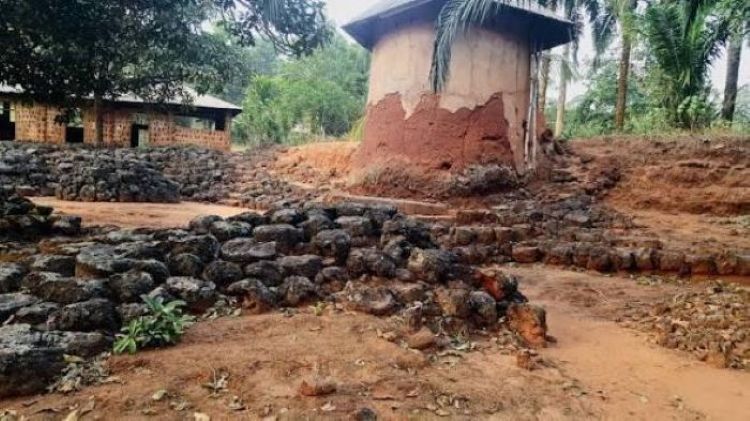
United States Consulate General in Lagos has awarded a $125,000 grant to support the conservation, digital documentation and physical preservation of the historic Lejja iron-smelting site in Enugu State, in what was described as part of Nigeria-US cooperation aimed at protecting the country’s cultural heritage.
The grant, awarded under the US Ambassador’s Fund for Cultural Preservation, will be implemented by the Centre for Memories, Enugu, through the Nchekwaba project, which will combine archaeological conservation with three-dimensional digital documentation, preservation of the site and documentation of endangered oral histories.
The project was formally launched on Thursday at the National Museum in Onikan, Lagos, with the United States Consul General, Brandon Hudspeth; Deputy Governor of Enugu State, Ifeanyi Ossai; representatives of the Federal Ministry of Art, Culture, Tourism and Creative Economy, National Commission for Museums and Monuments, Smithsonian Institution and other cultural heritage organisations in attendance.
Ossai, who represented Governor Peter Mbah, described the grant as a welcome partnership which the state was proud to support, stressing that the preservation of Lejja would require sustained collaboration between government, heritage institutions and the community. He said the government was preparing an executive bill to be forwarded to the state House of Assembly to provide a legal framework for the protection and administration of the site.
The deputy governor also stressed the importance of ensuring that residents of Lejja were actively involved in the preservation process, noting that the local population would ultimately be central to the project’s sustainability and resilience. Hudspeth, in remarks at the event, highlighted the project as an example of the continuing cultural partnership between Nigeria and the United States, particularly through US-funded cultural exchange programmes designed to deepen institutional and people-to-people ties between both countries.
He said the preservation initiative demonstrated how partnerships between American and Nigerian institutions could translate cultural exchange into practical efforts to safeguard heritage for future generations. The project is also an outcome of relationships developed through Cultural Heritage Forward, a US Department of State-funded exchange programme implemented in partnership with the Smithsonian Institution to strengthen the capacity of cultural heritage practitioners and promote collaborative approaches to the stewardship of heritage. The Smithsonian’s National Museum of African Art serves as the host institution for Nigerian participants in the programme.
The Project Lead and Executive Director of the Centre for Memories, Iheanyi Igboko, said the project was the culmination of decades of archaeological research and community efforts to preserve Lejja. Igboko said his own involvement with the site began after he was introduced to Prof Christian Opata, who had researched Lejja since his undergraduate days at the University of Nigeria, Nsukka.
He said the Centre for Memories did not discover Lejja but was joining an existing network of researchers, traditional custodians and community members who had spent decades studying and protecting the site.
“Lejja belongs to the Igbo Omabe tradition, and its religious life is closely tied to iron and to ancestor worship,” Igboko said, explaining that the significance of the site extended beyond its archaeological remains. He said iron had historically shaped Lejja’s spirituality, economy, governance and identity, with the community’s rituals, masquerades, musical instruments and traditional institutions retaining connections to the ancient iron-smelting tradition.
Lejja’s archaeological significance derives from the extensive remains of iron production found across the community, including furnaces, iron ore, tuyeres, and large quantities of slag. A 2024 study in Heritage Science found evidence that iron smelting had taken place in Lejja for more than 2,000 years and described the scale of ironworking remains as evidence of large-scale production over an extended period.
Earlier archaeological research reported substantially older radiocarbon dates, including a sample dated to 4005 ± 40 years before present, which researchers interpreted as more than 2,000 years BCE. However, subsequent research has described some of the early dates as contested and found other dates clustering around 2,000 years before present.
The distinction notwithstanding, researchers have identified Lejja as an important archaeological site for understanding the development and evolution of iron technology in southeastern Nigeria. According to Igboko, the Nchekwaba project will focus on five principal areas: conserving priority features of the site, digitally documenting its archaeological landscape, recording endangered oral histories, building community capacity and creating digital avenues through which people unable to visit Lejja can access its history.
He said the project would be implemented in collaboration with archaeologists, conservators, the Lejja community and heritage institutions, including the National Commission for Museums and Monuments, International Council on Monuments and Sites Nigeria, University of Nigeria, Nsukka, Museum of West African Art and the Smithsonian Institution.
Igboko said the Centre for Memories also hoped the project would provide a pathway towards the formal recognition of Lejja as a national heritage site and, ultimately, its consideration for UNESCO recognition. The Minister of Art, Culture, Tourism and Creative Economy, Hannatu Musawa, who represented at the event, described the project as an important intervention in preserving Nigeria’s historical legacy.
Musawa said the Lejja site represented evidence of Nigeria’s long history of technological innovation and pledged the ministry’s support for efforts to preserve cultural heritage as part of the Federal Government’s strategy of using culture and tourism to drive education, tourism and economic development.
She thanked the US Government for the grant and commended the Centre for Memories for securing the funding, while also acknowledging the Smithsonian Institution’s role in building international capacity and partnerships around cultural heritage preservation.
The National Commission for Museums and Monuments and other Nigerian cultural institutions are expected to work with the Centre for Memories and the Enugu State Government on the preservation programme. For Igboko, the project represents the latest stage of a relationship with the US Mission that began a decade ago, when he participated in the first Nigerian cohort of the Young African Leaders Initiative Regional Leadership Centre West Africa.
He said subsequent participation in the Cultural Heritage Forward programme helped deepen his understanding of contemporary heritage practice and contributed to his ability to develop the Lejja preservation project. “Ten years ago, YALI gave me capacity. The Cultural Heritage Forward Global Exchange Program, supported by the U.S. Department of State and the Smithsonian Institution, deepened my understanding of heritage practice.
“And now the Ambassadors Fund for Cultural Preservation has given the Centre For Memories the chance to put that capacity to work protecting the heritage we love,” he said. The project lead said the objective was ultimately to ensure that Lejja was not merely studied as an archaeological site but protected as part of Nigeria’s and humanity’s shared heritage.
