

By Tony Adibe
The Enugu State Government, in collaboration with the World Bank and the Federal Government of Nigeria, has commenced the Adolescent Girls Initiative for Learning and Empowerment (AGILE) project in the Coal City State.
NewsBits reports that this development demonstrates a crucial move toward a radical transformation in basic education, improving learning environments, and enhancing school enrolment and retention within every nook and cranny of the state.
The objective of the initiative is to create safe, inclusive, and conducive educational environments for adolescent girls while also extending support to all learners, thereby positioning the Coal City State as a pioneering epicentre for the program within the South-East geo-political zone.
As Enugu State makes its policies in tandem with international funding mechanisms, the state government’s target is to make sure that no child in Enugu State is left behind, laying a firm foundation for sustainable human capital development. There should be no school drop-out in the entire Coal City State, the AGILE officials all chorused during the interactive roundtable discussion.
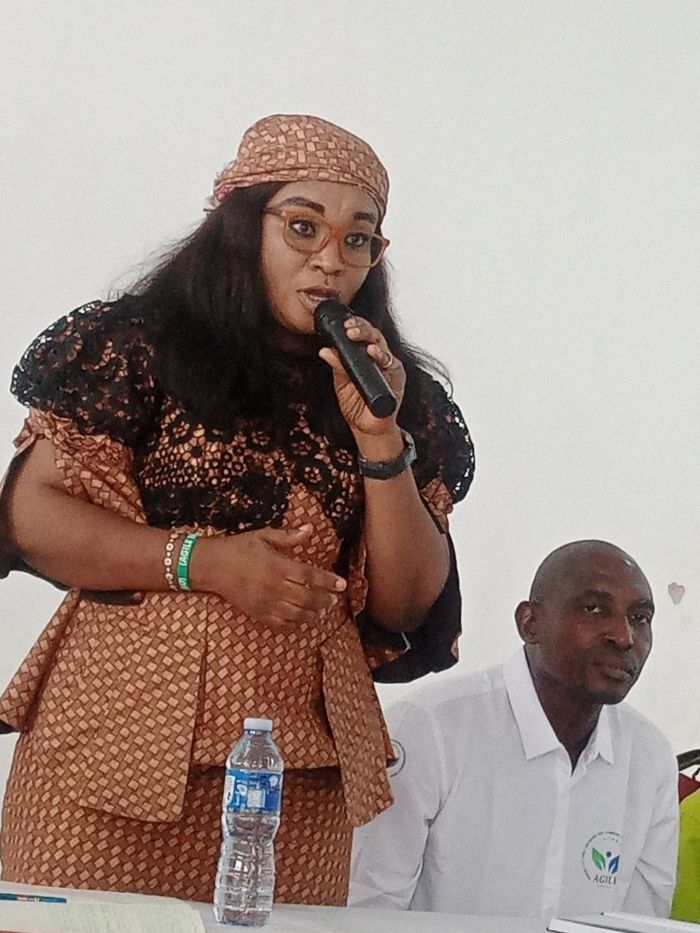
Addressing an interactive session during a media roundtable aimed at providing comprehensive insights into the project’s framework, the Enugu State Project Coordinator for AGILE, Dr. Ebele Georgina Onuora, listed the core objectives behind the initiative.
Dr. Onuora said: “The project’s overarching goal is to address the systemic barriers that cause children to drop out of school, thereby facilitating their return, sustained retention, and eventual empowerment.”
According to her, while the program focuses primarily on adolescent girls, male students and the broader school population also stand to benefit significantly from renovated facilities, upgraded infrastructure, and enhanced learning resources.
The State Project Coordinator explained that key to AGILE’s immediate rollout in Enugu State is the execution of Component 1.2, which, she said, “focuses on the rehabilitation of existing public secondary school infrastructure.” She said that during this initial phase, the project is intervening in 217 public secondary schools carefully selected through a comprehensive, needs-based validation and environmental screening exercise.
Dr Onuora further said that in order to make sure there is environmental compliance and safety, the project has secured required Codes of Practice and is implementing specialized Security Management Plans (SMP) and community-level sensitization to reassure families of state protection and support.
Throwing light on what she regarded as physical interventions, she said such included “extensive building renovations, the provision of modern Water, Sanitation, and Hygiene (WASH) facilities”. They included facilities such as clean toilets and solar-powered boreholes as well as the distribution of essential tuition and learning materials, including textbooks and writing items.
The project coordinator emphasised that the WASH component is particularly critical for adolescent girls, as proper hygiene facilities directly reduce absenteeism from school said to be caused by menstrual hygiene management.
Onuora said that to make sure there is equitable distribution of resources, interventions are structured into small, medium, and large grant categories determined by school enrolment capacities: Small Grants: Schools with enrolments under 200 students. Medium Grants: Schools with enrolments between 200 and 500 students. Large Grants: Schools with enrolments exceeding 500 students.
However, besides physical infrastructure, Onuora explained that “AGILE addresses deep-seated social and institutional challenges through holistic support mechanisms”. According to her, the initiative incorporates social norm engagements and community partnerships to identify and dissolve cultural or socio-economic barriers preventing children from going to school.
She said the AGILE project set up Grievance Redress Mechanisms (GRM)—featuring school logbooks and suggestion/channel boxes— with Gender-Based Violence (GBV) clubs and Safe School clubs to stamp out anti-social vices, protect students, and build safe environments.
Onuora further explained that the wider AGILE framework also comprises “digital literacy training, conditional cash transfers, alternative education pathways, and special observances for international days dedicated to the girl child, national awareness, and children with special needs”.
Also, in her remarks the AGILE Gender-Based Violence Officer (GBV), Uchenna Linda Aneke explained that the GBV Prevention Measure was meant to stop sexual harassment, sexual exploitation or abuse and intimidation directed to an individual because of his or her gender.
“We have a mechanism where issues concerning gender-based violence are promptly reported and handled. We also have training and filing of code of conduct. Everybody that is working with AGILE Initiative implementation project, must sign this code of conduct to ensure self-discipline in the discharge of their duties,” Aneke said.
According to the GBV officer, AGILE focuses on inclusion and a gender-responsive environment so that every child, including the physically challenged, will not be left out in the scheme of academic activities. AGILE is interested in making sure that even the physically challenged girls are included in things concerning their affairs, Aneke said.
In her contribution, the Social/Grievance Redress Mechanism (GRM) Officer, AGILE Project, Helen N. Anih said that “our priority is that these students will have a safe environment where they can learn. So, we encourage every of our stakeholders to speak up. One of our slogans says: Speak Up and AGILE will Act!”
Anih maintained that at AGILE, every student, and stakeholder’s voice must count. “It is our heart’s desire that if you see anything that will affect our project negatively, you speak out because this is our project, and if anything goes wrong in the renovation, it will affect future generations because the renovation will not stand the test of time. It’s our desire to see that everything we are doing must stand the test of time. That’s why we have a Grievance Prevention Mechanism. It is even for the stakeholders to speak up whenever they observe anything going wrong,” she said.
Both Aneke and Anih lauded Governor Peter Mbah for creating a conducive environment for the existence of AGILE Initiative in the state. The officers also commended Dr Onuora for her doggedness and determination in ensuring the success of the initiative.
Also contributing at the roundtable, key project officials commended Governor Peter Ndubuisi Mbah for his education-friendly governance and political determination in making Enugu State the pioneer host for the AGILE project in the South-East region.
