

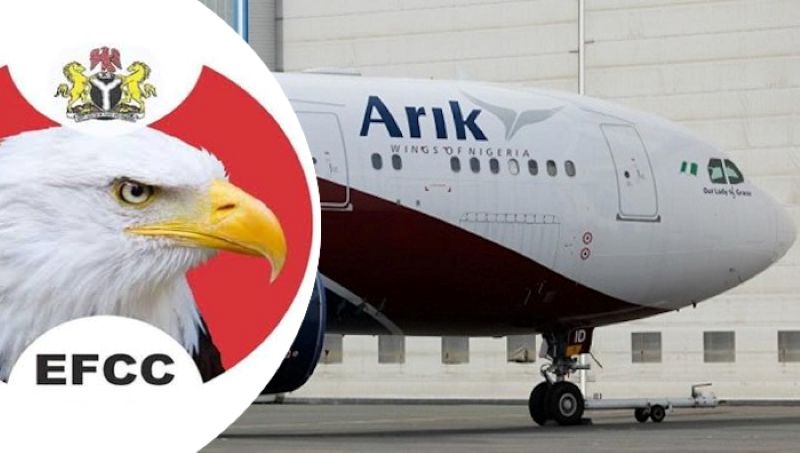
The ongoing trial of former Managing Director of the Asset Management Corporation of Nigeria (AMCON), Mr Ahmed Kuru, and four others recorded a major development on May 19, 2026, at the resumption of the trial presided over by Justice Mojisola Dada, when the Special Offences Court sitting in Ikeja, Lagos, admitted evidence that the defendants acted within the mandate of the Board resolution of the Asset Management Corporation of Nigeria (AMCON).
Kuru is standing trial alongside Mr Kamilu Omokide, Receiver-Manager of Arik Air; Capt. Roy Ilegbodu, Managing Director of Arik Air; Union Bank of Nigeria Plc; and Super Bravo Limited, following a petition filed by Mr Femi Falana, SAN, on behalf of Arik Air promoter, Sir Johnson Arumemi-Ikide.
During cross-examination by counsel to the 1st and 3rd Defendants, Prof. Taiwo Osipitan, SAN, the EFCC witness further admitted that AMCON had, in a written communication dated November 28, 2024, addressed to the Chairman of the EFCC, clarified that the defendants acted on behalf of the Corporation and committed no wrongdoing in the discharge of their responsibilities over the affairs of Arik Air.
The letter, tendered during proceedings, reportedly stated that the actions complained about arose from AMCON’s statutory mandate of debt recovery and enforcement of security interests over Arik Air’s assets as a chronic debtor. AMCON maintained in the communication that the decisions taken concerning Arik Air and NG Eagle were official corporate actions carried out within the lawful authority of the Board of Directors of the Corporation and its officers.
According to the letter, AMCON described the criminal charges as an attempt to criminalise the lawful exercise of its statutory powers under the AMCON Act, warning that such actions could undermine the Corporation’s debt recovery mandate and discourage its officers from carrying out lawful responsibilities.
AMCON also stated in the communication to the EFCC Chairman that what existed between the parties were commercial disputes already pending before the courts and not criminal acts. The Corporation further stressed that there was “nothing in the Charge indicating ANY personal benefits to AMCON and its officers.”
Under cross-examination, Kaltungo admitted that the activities carried out by the Receiver-Manager and the management of Arik Air were sanctioned by the Board of AMCON. He also confirmed that the defendants acted in their capacities as agents, privies, subsidiaries, or representatives of AMCON in relation to the affairs of Arik Air (in Receivership).
The EFCC witness further admitted that Mr Omokide, the Receiver-Manager of Arik Air and the 1st Defendant in the matter, did not personally benefit from the sale of NG Eagle, the Special Purpose Vehicle (SPV) established by AMCON as part of efforts to exit its aviation toxic assets portfolio.
Kaltungo confirmed before the court that Omokide held only a nominee share in NG Eagle, while AMCON remained the majority shareholder. He equally admitted that proceeds from the sale of NG Eagle went directly to AMCON and not to any of the defendants standing trial.
Prof. Osipitan, SAN, questioned why the EFCC proceeded with criminal charges against the defendants despite AMCON’s written clarification that the actions complained about were authorised corporate decisions undertaken on behalf of the Corporation and despite the absence of evidence showing personal enrichment by any of the accused persons.
The defence also maintained that the defendants merely acted in furtherance of AMCON’s statutory mandate under the AMCON Act, 2010 (as amended), which empowers the Corporation to recover non-performing loans, enforce collateral rights, and stabilise distressed assets acquired by the Corporation.
AMCON’s intervention in Arik Air was initiated following concerns raised by the Federal Ministry of Aviation to the administration of late President Muhammadu Buhari that the airline was on the verge of collapse and might not survive beyond two months without urgent intervention.
At the time, Arik Air reportedly controlled more than 60 per cent of domestic air transportation in Nigeria but was burdened by operational and financial challenges, including over N300 billion in debt obligations, weak corporate governance, frequent flight cancellations, poor On-Time Performance (OTP), unpaid salaries, lapsed insurance obligations, and threats of service withdrawal by key service providers.
Justice Mojisola Dada subsequently adjourned the matter to June 25 and July 7, 2026, for continuation of the cross-examination of the EFCC witness.
